
Last updated August 25, 2026
Free on-site gate assessment - hinges, posts, and your LiftMaster or Nice gate operator checked before anything is quoted
The assessment is free and the quote is the invoice.

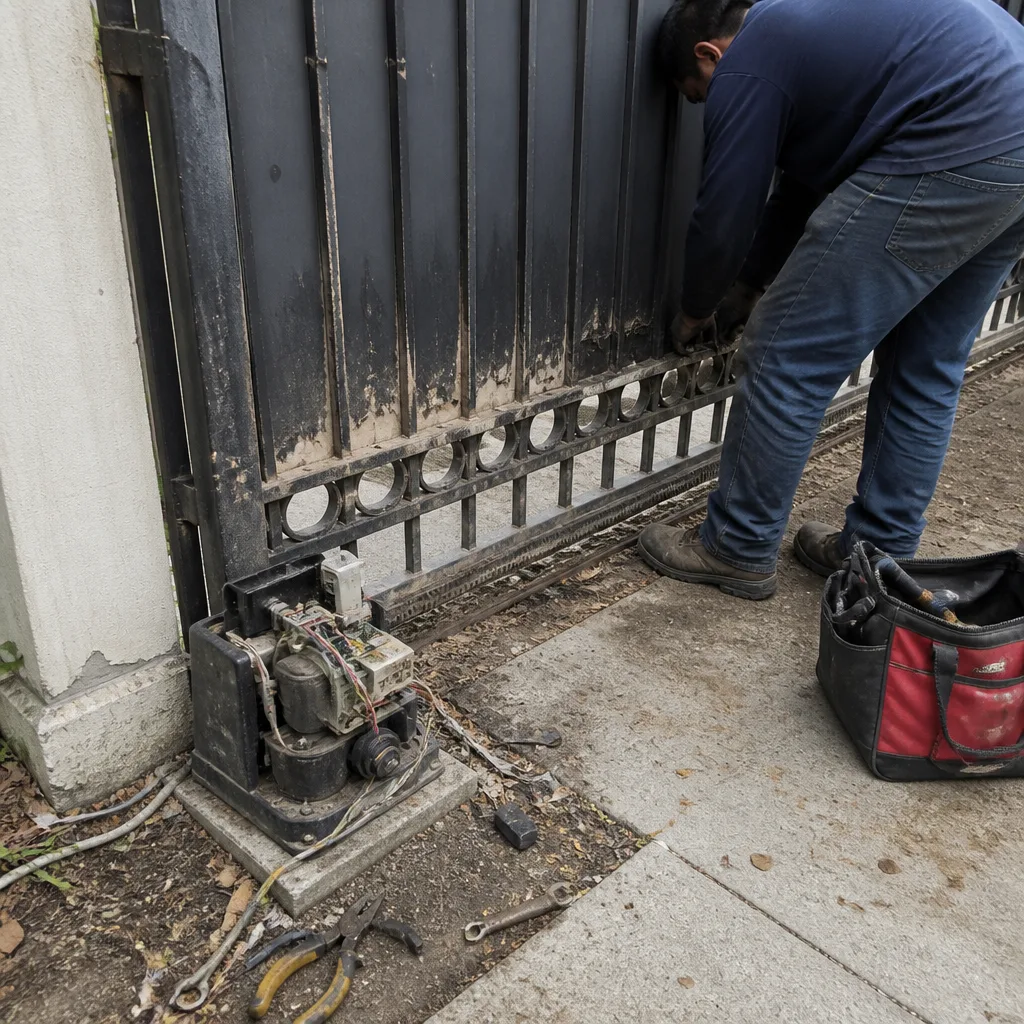 Before
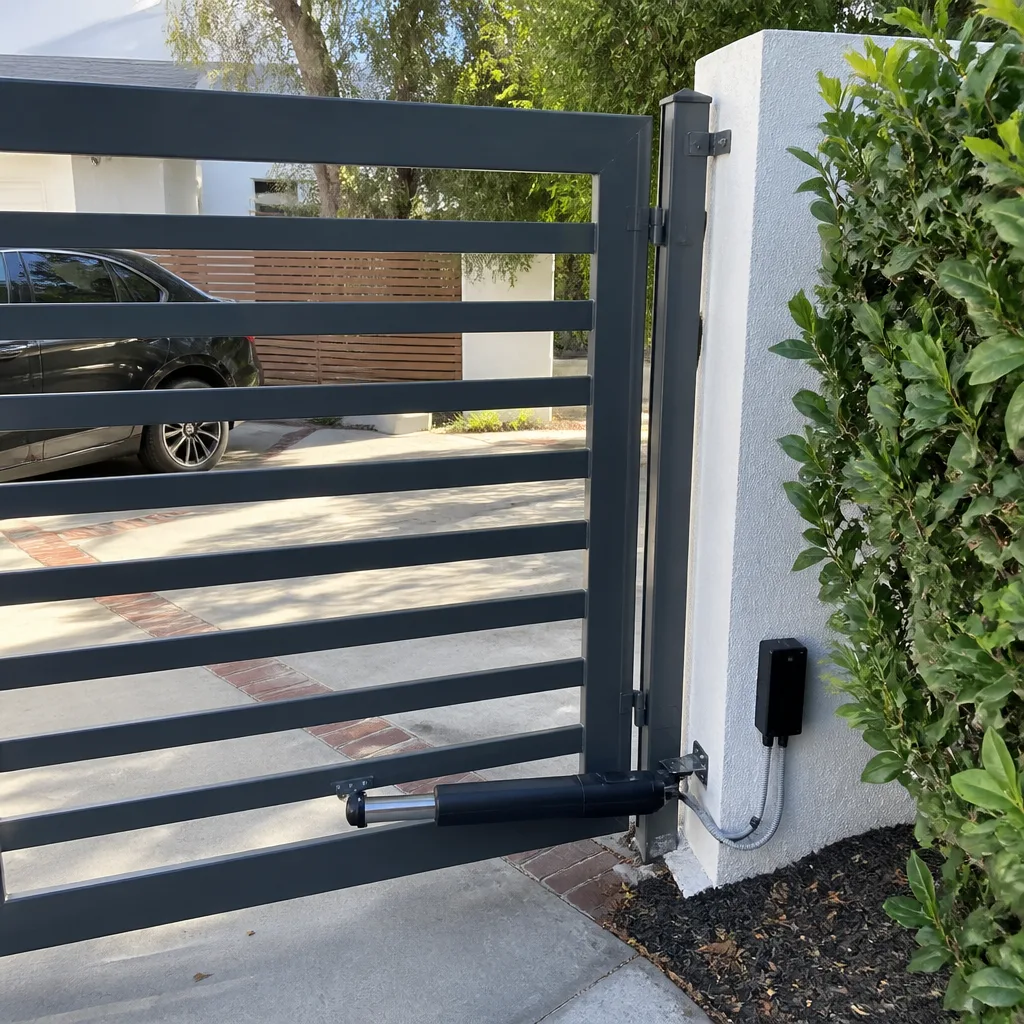 After
After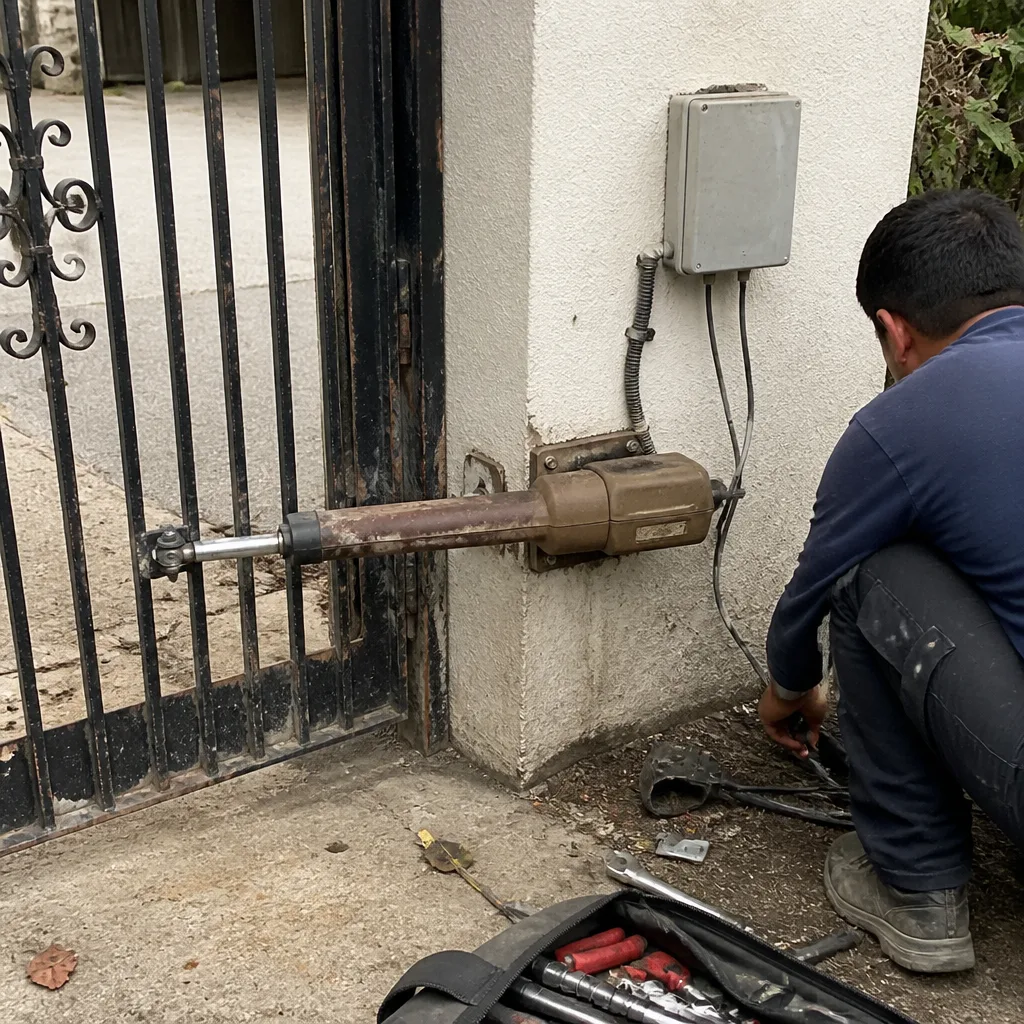 Before
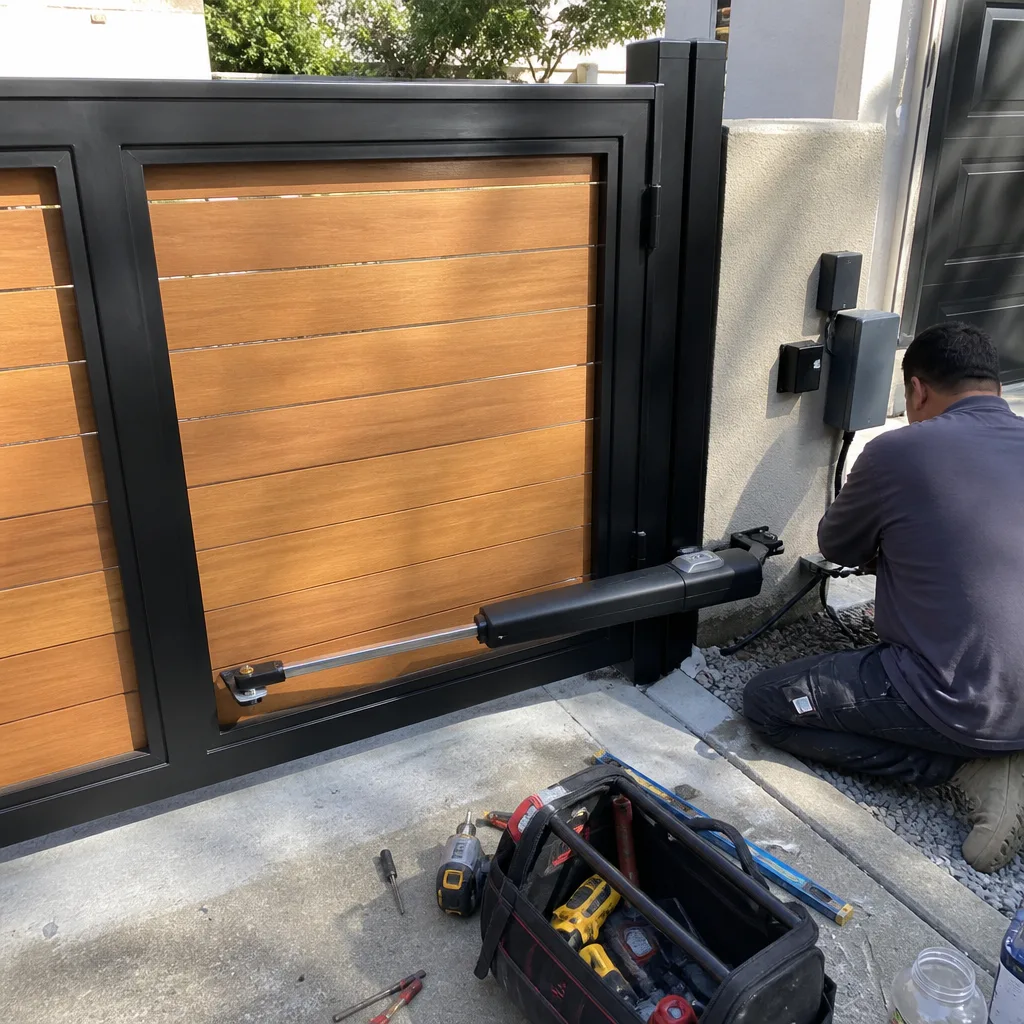 After
After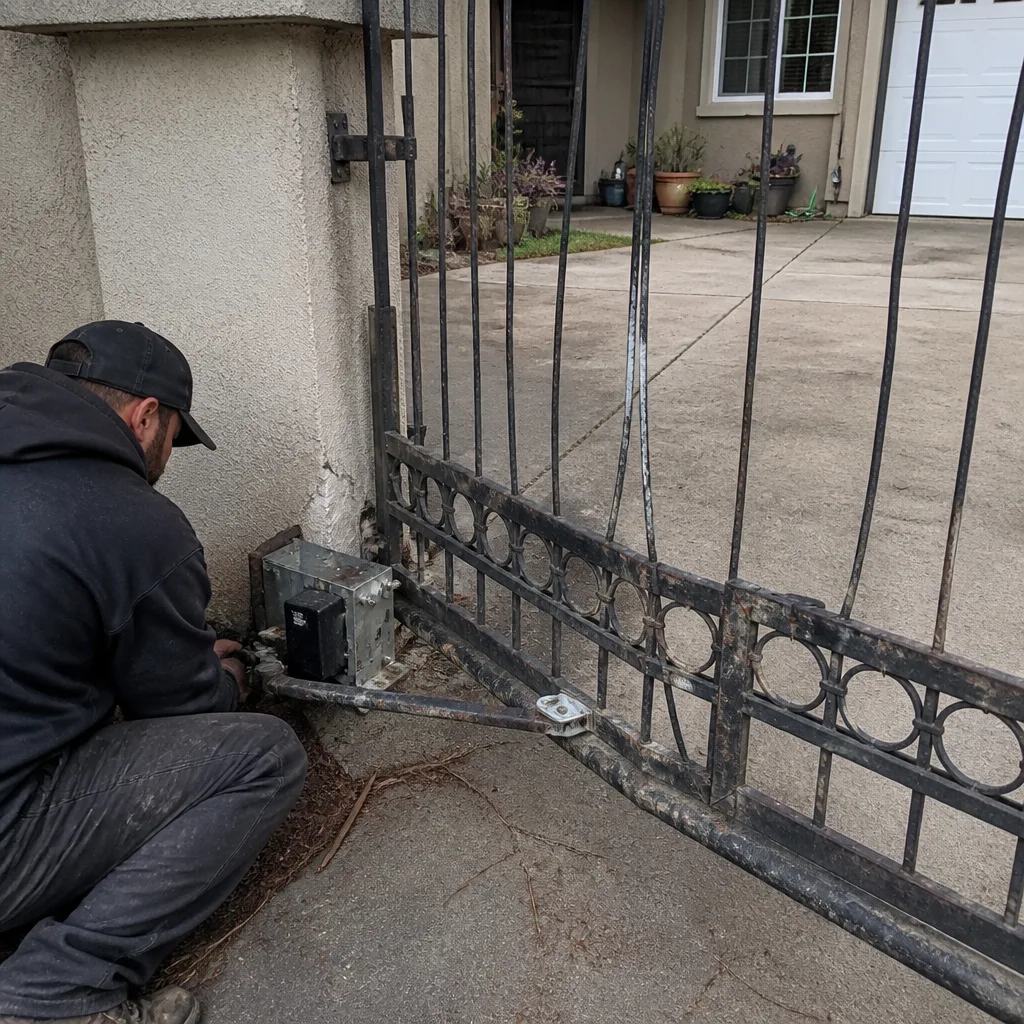 Before
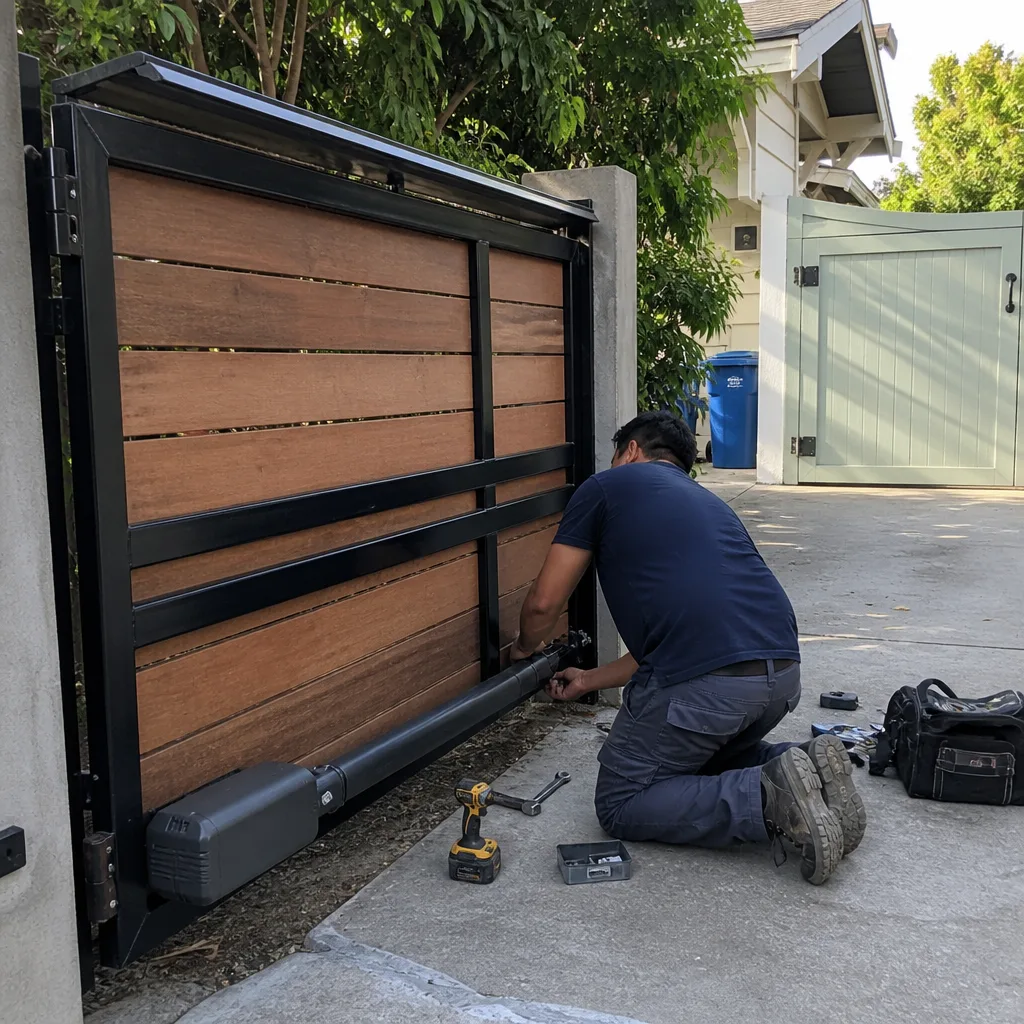 After
AfterSeasonal Gate Repair Care for Culver City: Year-Round Homeowner’s Guide
Most Culver City homeowners don’t think about their driveway gate until it stops moving. That’s the expensive way to do it. A gate that creaks through January, bakes through August, and grinds through the Santa Ana winds of October will eventually fail, usually at the worst possible moment: 7:15 on a Monday morning, car running, gate stuck halfway. This guide covers what Culver City’s coastal-inland climate actually does to gate hardware, what to check each season, what you can handle yourself, and which problems need a trained technician before they become a Sunday-night emergency. We’ll walk through the full year, month by month and season by season.
Quick Answer
Seasonal gate care in Culver City comes down to four things: inspecting hinges, wheels, and tracks after the rainy season; tightening hardware and checking the motor before summer heat arrives; clearing leaves and debris from tracks every fall; and testing the auto-reverse and battery backup system twice a year. Most homeowners can handle basic cleaning, lubrication, and visual checks in about 30 minutes per season. Everything else, especially anything involving tension springs or opener electronics, belongs in a professional’s hands.
Table of Contents
- Winter: What Rain Does to a Gate in Culver City
- Spring: The Right Time for a Tune-Up
- Summer: Heat, Metal Expansion, and Motor Strain
- Fall: Santa Ana Winds, Leaves, and Debris
- What to Lubricate, What to Leave Alone
- Safety Checks You Can Do in Ten Minutes
- Battery Backups and Why Culver City Loses Power
- What Seasonal Gate Maintenance Actually Costs in Culver City
- Common Mistakes to Avoid
- When to Call a Professional
- Frequently Asked Questions
- The Bottom Line
Winter: What Rain Does to a Gate in Culver City
Culver City sits in a strange weather pocket. We get Pacific moisture rolling in from the west, but we’re far enough inland to avoid the thick marine layer that keeps Santa Monica damp all morning. The result is a cycle that’s hard on metal: rain, then dry heat, then rain again, then dry heat again. Steel gates, especially older ones with powder-coat finishes that have been nicked or scratched, start to rust faster than homeowners expect.
The winter months, roughly December through February, are when we see the most hinge failures and track corrosion calls. Water pools at the bottom of the gate post. That’s where the lower hinge sits. If the weep hole at the base of the post is clogged, water stays there for weeks. The hinge pin corrodes, the gate starts to sag, and within a season or two the gate drags on the ground or binds against the latch.
- Check the bottom hinge and post base after every heavy rain. Look for standing water, rust staining, or white chalky corrosion on aluminum hardware.
- Clear the weep holes. Most Culver City gate posts have small drainage holes near the base. Poke them clear with a stiff wire. It takes ten seconds and prevents a $400 hinge replacement.
- Inspect the finish for nicks and scratches. Any bare metal showing will rust during the wet season. Touch-up paint or a clear rust inhibitor is cheap insurance.
- Test the opener after a storm. Moisture gets into circuit boards and limit switches. If the gate hesitates, reverses without reason, or makes a different sound than usual, don’t ignore it.
In neighborhoods like Carlson Park, Sunkist Park, and Blair Hills, older sliding gates sitting on steel tracks have a specific winter problem: the track fills with silt and fine debris washed in from rain. The wheels grind through it, wearing flat spots. We’ve replaced track wheels on 20-year-old gates in Culver City where the original wheels looked like they’d been machined down by sandpaper. Regular track cleaning during wet months prevents about half of the wheel replacements we do each year.
For homes with wooden gates, winter is a different animal. Rain swells the wood, the gate gets tight in the frame, and the opener motor works harder to push it. Then the wood dries out in the spring and the gate loosens. This cycle is normal, but it means the hinges and latch bolts need checking twice as often as they would on a steel gate. The Ironworks Gate Co. home guide to gate materials goes deeper into the differences.
Spring: The Right Time for a Tune-Up
Every year around March and April, Culver City homeowners start thinking about the same things: garden projects, fence repairs, and finally dealing with the gate that’s been squeaking since November. Spring is the busiest season for gate repair and tune-up calls, and there’s a good reason: the winter damage is now visible, the days are longer, and people want the gate working right before summer.
A spring tune-up should cover the mechanical basics. This is not a cosmetic detail. It’s the difference between a gate that lasts 10 years and one that lasts 25.
- Tighten all hinge bolts and bracket fasteners. Temperature swings through winter and spring cause metal to expand and contract. Bolts work loose. A gate with loose hinges wracks under its own weight, and that puts uneven load on the opener.
- Lubricate the hinges, wheels, and drive chain (if the opener has one). Use a white lithium grease or a dedicated gate hinge lubricant. Avoid WD-40; it displaces water but it’s not a long-term lubricant.
- Check the gate alignment. Stand back and look at the gap between the gate leaf and the post. If it narrows at the top, the gate is sagging. A sagging gate will only get worse, and every week of delay makes the eventual repair more involved.
- Test the opener’s force settings. This is a critical safety check. The opener should stop and reverse if the gate meets resistance. In Culver City, where gates often face sidewalks or alleys, an improperly set opener is a genuine hazard.
- Watch the gate’s speed. If it opens or closes slower than it did in spring, the motor is laboring. Don’t wait for the grinding noise.
- Listen for a change in pitch. A healthy opener hums. A struggling opener whines.
- Check the safety photo eyes. Heat can warp mounting brackets slightly, knocking the beams out of alignment. If the gate stops mid-cycle and reverses for no visible reason, misaligned photo eyes are usually the culprit.
- Feel the motor housing. If it’s too hot to touch after a cycle, it needs attention. Persistent overheating shortens motor life dramatically.
- Clear the full length of the track twice in a month during heavy leaf-drop. Don’t just sweep the visible area. Use a screwdriver or a stiff brush to clean the channel where the wheels ride.
- Check the gate’s closed position after a Santa Ana wind event. If it has drifted, the opener’s brake or motor may need attention. This is not a homeowner-fixable problem on most models.
- Inspect the hinge bolts for shear stress after a major windstorm. Wind fatigue shows up as slight oval-shaped wear around bolt holes. Once that wear starts, it accelerates.
- Prune back any branches overhanging the gate’s arc of travel. A swinging branch that hits a moving gate is a problem waiting for a windy afternoon.
- Hinge pins and hinge pivot points. These take the entire weight of the gate. Use a white lithium grease or a dedicated gate hinge grease. Apply it sparingly, wipe off the excess, and repeat every six months in Culver City’s climate.
- Wheels and roller bearings on sliding gates. The wheel bearings are sealed on newer gates, but older models often have open bearings that take grease. If the wheel has a grease fitting, use it. If it’s sealed, leave it alone.
- Drive chains and chain-tooth contact points on chain-drive openers. Chain lube, applied lightly, keeps them quiet and reduces wear.
- Latch and lock mechanisms. A dry latch wears faster and sticks more. A little graphite or lithium spray once a year keeps things moving.
- The opener motor itself. If the motor needs lubrication, service is already too late. Internal motor bearings are sealed. Adding anything to the outside of the housing does nothing and can pull dust into the unit.
- The circuit board and electrical terminals. Never spray any lubricant into the opener housing, near the control board, or around limit switches. We service more than a few openers where a well-meaning homeowner’s spray lubrication shorted a board.
- The belt on belt-drive openers. Rubber belts don’t need lubrication. Anything you spray on them will cause slippage and attract dirt.
- Test the auto-reverse on the opener. With the gate closing, hold a firm hand against the leading edge. The gate should stop and reverse within one to two seconds. If it keeps pushing, the force setting is too high. This is the single most important test on any automatic gate.
- Check the photo eyes or safety edge sensors. Wave your hand in front of the photo eyes while the gate is closing. The gate should stop and reverse. If the photo eyes are wired as non-contact sensors, use a stick or a leaf blower test to break the beam.
- Look at the hinge welds and bolts. Use a flashlight. Look for hairline cracks at the weld points, elongated bolt holes, or missing bolts. Cracked welds do not heal. They spread.
- Inspect the gate’s leading edge. Look for sharp edges, bent metal, or exposed fasteners that could catch clothing or skin. Rusty, sharp gate edges are a common injury source on older iron gates in Culver City.
- Test the manual release. Every automatic opener has a manual release mechanism, usually a keyed lever or a pull chain. Make sure you know where it is and that it works. In a power outage, you need to be able to operate the gate by hand.
- Lubricating with WD-40 and calling it done. WD-40 is a water displacer, not a lubricant. It washes out existing grease and leaves the hinge drier than before. Use white lithium grease or a dedicated gate lubricant.
- Ignoring a slow gate. A gate that opens more slowly than it used to is telling you something. In Culver City’s heat, a struggling motor is a failing motor. Waiting for the complete failure never saves money.
- Forcing a manually operated gate when the opener is on. If the gate is stuck and the opener is engaged, don’t force it. You’ll damage the gear train or the chain drive. Use the manual release first.
- Pressure-washing the opener housing. We see this after every rainy season. Pressure washers force water past seals and into electronic components. Wash the gate by hand if you need to clean it, and keep the spray away from the motor and control box.
- Adjusting limit switches by trial and error. Limit switches control where the gate stops. If they’re set wrong, the gate can over-travel, under-travel, or slam the stop post. Incorrect limit settings also burn up motors. This is a calibration job, not a guessing game.
- Skipping the safety tests because the gate “always worked fine.” Safety systems age. Sensors get dirty, photo eyes drift, and force settings drift as the gate’s weight changes. Test every six months without fail.
- Buying a generic parts replacement online and expecting it to fit a nine-year-old opener. Gate hardware is not standardized across brands. A cheap universal-style remote or keypad may work, or it may cause interference problems, and sometimes it won’t work at all. On brands like DoorKing and Ghost Controls, proprietary protocols are common.
Spring is also the right time to take advantage of the $89 Seasonal Tune-Up offered by our team at Ironworks Gate Co. It covers what a homeowner can’t comfortably reach: internal opener diagnostics, limit switch calibration, force sensitivity testing, and a nine-point hardware inspection. Most spring tune-ups take under an hour and almost always catch at least one thing that would have become a summer breakdown.
Summer: Heat, Metal Expansion, and Motor Strain
Culver City summers are not as brutal as the San Fernando Valley, but we regularly see stretches in the mid-90s through August and September. Heat does two predictable things to automatic gates: it makes the metal expand, and it makes the motor work harder.
Metal expansion is not theoretical. A 16-foot steel gate leaf can grow by roughly a quarter of an inch between the cool of a June morning and the peak of an August afternoon. That doesn’t sound like much, but it’s enough to change the gate’s behavior. A gate that opened perfectly in March suddenly starts hitting the stop post with a bang, or the latch doesn’t seat cleanly, or the opener’s limit switch keeps tripping at the wrong point. These are not mysterious failures. They’re expansion, and they’re entirely fixable.
The motor, meanwhile, is dealing with its own problem. Heat builds up inside the housing, especially on openers mounted in direct afternoon sun on the west side of a driveway. Older openers with worn gears or tired capacitors fail more often in summer than in any other season. We keep a repair log, and the pattern is clear: August and September are our two biggest months for opener motor replacements in Culver City.
For homeowners, summer checks are simple:
One Culver City-specific note: homes in the hills above Jefferson Boulevard, especially around the Baldwin Hills overlook, get stronger afternoon sun exposure and more pronounced heat effects on gate hardware. We’ve seen gates in those neighborhoods need opener adjustment almost every summer, while a shaded gate on a Carlson Park side street runs fine for years on the same settings. Where the gate sits on the property matters as much as the equipment.
Fall: Santa Ana Winds, Leaves, and Debris
In Culver City, fall is not about snow or freezing temperatures. It’s about wind. The Santa Ana wind season, running from September through November, puts gates under a specific kind of stress that most homeowners never think about until they see it.
Wind pushes directly against a gate leaf. That force transfers through the gate to the hinges and to the opener. A sliding gate in a windstorm acts like a big sail. The opener motor is the only thing holding it in position, because most residential openers don’t have a separate mechanical lock. If the winds are strong enough and the opener’s internal brake is worn, the gate will drift. Homeowners call us every fall with the same story: the gate was closed when they went to bed, and by morning it had slid open a few feet on its own.
Wind also carries debris. In Culver City, that means a lot of eucalyptus leaves, palm fronds, and sycamore leaves, depending on the neighborhood. Sunkist Park and the streets around Veterans Memorial Park have heavy tree canopies that shed directly onto driveways. Leaves build up in the track channel of sliding gates and wedge between the gate and the post on swing gates. A leaf mass in the wrong spot can trip the safety sensor or block the gate from closing completely, which leaves the home unsecured overnight.
The fall checklist:
Fall is also a good season for checking the opener’s built-in safety edge or the external edge sensor strip on the gate leaf. These components age. The rubber boot cracks, moisture gets in, and the sensor stops working. On a windy day, a gate that doesn’t sense an obstacle while closing becomes a genuine hazard. We recommend testing the safety edge by applying firm hand pressure to the gate while it closes. It should reverse immediately. If it doesn’t, that’s a professional call, not a YouTube project.
What to Lubricate, What to Leave Alone
Lubrication is the most misunderstood part of gate maintenance. Half the homeowners we meet in Culver City are lubricating the wrong parts, using the wrong product, or doing it so rarely that it hardly matters. Let’s set the record straight.
What to lubricate:
What to leave alone:
The cadence depends somewhat on the gate’s exposure. A gate on a shaded side street in Carlson Park may need lubrication twice a year. A gate on a sunny corner lot with heavy use may need it quarterly. Pay attention to the sound. A properly lubricated gate is quiet. Squeaks, squeals, and grinds are lubrication calls, not cosmetic issues.
Safety Checks You Can Do in Ten Minutes
Gates are the heaviest moving object on most Culver City properties. A 14-foot steel gate leaf weighs several hundred pounds. When an automatic opener is involved, the stakes go up. California building codes and UL 325 standards exist for a reason: gates have killed people, and they mostly kill people because the safety systems were never tested after installation.
Here’s the ten-minute safety routine we recommend to every homeowner, twice a year:
One note on safety that we tell every homeowner: the tension springs and torsion components on some gate systems are under significant load. If you see a broken spring or a bent arm, do not attempt to release the tension yourself. Those parts can cause serious injury when they let go. That’s a job for a trained technician with the right tools and the right respect for the load involved.
Battery Backups and Why Culver City Loses Power
Culver City is part of the Los Angeles power grid, which means three things are predictable: rolling outages during heat waves, Public Safety Power Shutoff events during fall wind seasons, and a rising number of local outages as the grid ages. Homeowners who rely on an automatic gate for security and access should not be discovering during an outage that their battery backup is dead.
Most residential gate openers installed in the last 15 years have a battery backup option. On brands like Ghost Controls, Elite, and Mighty Mule, the battery is an external unit wired into the opener’s control board. On some LiftMaster and DoorKing models, it’s integrated. Regardless of the brand, the battery needs attention. They typically last two to five years, and Culver City’s heat shortens that lifespan.
The test is simple: unplug the opener from its power source, or switch off the breaker that serves the opener, and try to run the gate. If the gate opens and closes at normal speed, the battery is healthy. If it moves slowly, labors, or doesn’t move at all, the battery is failing or already dead. Test this twice a year, ideally before summer heat season and before Santa Ana season.
We also see a brand-specific issue worth mentioning. Some gate opener brands require a specific reset procedure after a battery replacement that isn’t documented in the homeowner manual. Homeowners call us after replacing a battery themselves and finding the gate running in the wrong direction or refusing to close. On the nine opener brands we service, including Elite and Mighty Mule, we’ve seen this pattern enough times to know that a “simple” battery swap is sometimes not so simple. If you’re not sure, call first. We quote the price before we touch anything.
What Seasonal Gate Maintenance Actually Costs in Culver City
Here’s what homeowners in Culver City should expect to pay for seasonal gate care, based on our current pricing and the market as we see it:
| Service | Typical Range | Notes |
|---|---|---|
| Seasonal tune-up | $89 | Our flat rate, includes diagnostics and adjustment |
| Hinge replacement (single hinge) | $125-$275 | Depends on gate weight and hinge type |
| Track wheel replacement (sliding gate) | $150-$350 | Includes labor and parts, varies with wheel size |
| Safety photo eye alignment | $75-$150 | Often included in tune-up if it’s minor |
| Battery backup replacement | $95-$275 | Brand-dependent, installed and tested |
| Full opener replacement | $850-$2,400 | Varies by brand, horsepower, and site conditions |
These are our prices, quoted and agreed to before any work begins. You’ll know the number before we start. No surprises on the bill, ever. For repairs over $250, we currently offer $50 off. And if another company has given you a written estimate, we’ll provide a free second opinion before you commit to anything. We’d rather have you make an informed decision than an expensive mistake.
For Culver City homeowners, the most important number on that table is the $89 tune-up. It catches problems before they become multi-hundred-dollar repairs, and it’s the cheapest gate insurance you can buy. Call us at (619) 350-4659 to schedule one. We answer the phone, 24 hours a day, with a live person.
Common Mistakes to Avoid
When to Call a Professional
Some gate problems are clear DIY territory. Cleaning the track, lubricating hinges, clearing dead leaves from the gate’s path: those are homeowner jobs. Other problems are not. Broken springs under tension, a bent gate arm, an opener that sparks or trips a breaker, a gate that jerks and shudders when moving, a keypad that won’t respond, an intermittent opening and closing on its own. Any welding, any gate resizing, any opener replacement, any access control wiring. These are professional jobs because the stakes include your family’s safety and your home’s security. A gate that half-closes because a DIY repair left the limit switch misaligned is not protecting anything. Ironworks Gate Co. offers free estimates in Culver City, call (619) 350-4659. We’ll tell you honestly what the gate needs, what it doesn’t need, and what it should cost. Then you decide.
Frequently Asked Questions
Twice a year is the right cadence for most Culver City gates: once in early spring after the rainy season, and once in early fall before Santa Ana wind season. If your gate gets heavy daily use or sits in direct afternoon sun, a quarterly check is safer. Our $89 tune-up covers the diagnostics and adjustments a homeowner can’t reasonably do at home.
Culver City is about five miles inland, so direct salt spray is not a major issue the way it is in Marina del Rey or Playa del Rey. But we do see accelerated corrosion on gates near the western edges of the city, especially around the neighborhoods closest to the 405 and the Ballona Creek corridor, where coastal moisture moves inland on morning fog. Powder-coated steel gates hold up well if the coating stays intact. Aluminum gates do even better. If you’re replacing a gate and live on the west side of Culver City, ask about aluminum as an option.
Morning creaking is a temperature and humidity effect. Overnight moisture condenses on the hinge pins, and as the metal warms through the morning, the parts shift. The creaking means the hinges are dry and need lubrication. This is the easiest fix in gate care: white lithium grease on the hinge pins, done. If the creaking continues after lubrication, the hinge pin itself is worn or the hinge is out of round, and that’s a replacement, not a quick fix.
A full opener replacement includes removing the old operator, installing the new motor and gear assembly, aligning and calibrating the limit switches, setting the auto-reverse force sensitivity, wiring in the safety photo eyes and edge sensors, programming remotes and keypads, and testing everything for a full open/close cycle. We also check the gate leaf itself for any mechanical problems that would shorten the new opener’s life, and handle the power run verification. The price is quoted and agreed before any work starts.
We service nine major automation brands: LiftMaster, FAAC, BFT, Linear, Viking, Ghost Controls, DoorKing, Elite, and Mighty Mule. If your opener is one of those, we can diagnose it and fix it correctly on the first visit. If it’s something outside our nine brands, we’ll tell you honestly and point you in the right direction. We’d rather lose a job than pretend to be experts on equipment we don’t know.
Most hinge replacements, track repairs, and opener adjustments are completed in a single visit. A routine repair might take one to two hours. A full opener replacement is longer, but still usually a same-day job. The best way to get an accurate timeline is to call (619) 350-4659 and describe the problem. We answer the phone with a live person, 24 hours a day, and we can usually schedule service within a day or two for Culver City addresses.
The Bottom Line
Culver City’s weather is mild, but it’s not gentle on gates. Rain, heat, wind, and leaf debris each cause predictable problems that get expensive when ignored. The seasonal rhythm is straightforward: inspect after rain, tune up in spring, watch for heat strain in summer, and clear wind-blown debris in fall. Most of the work is quick, and a homeowner can handle the basics. For everything else, the right call is a technician who knows gate hardware and automation. We hope this guide helps you keep your gate running for years. When it needs more than a seasonal check, we’re here, and we stand behind every job in writing.
Written by Victor Salinas, Owner at Ironworks Gate Co., serving Culver City since 2013.