
Last updated August 25, 2026
Free on-site gate assessment - hinges, posts, and your LiftMaster or Nice gate operator checked before anything is quoted
The assessment is free and the quote is the invoice.
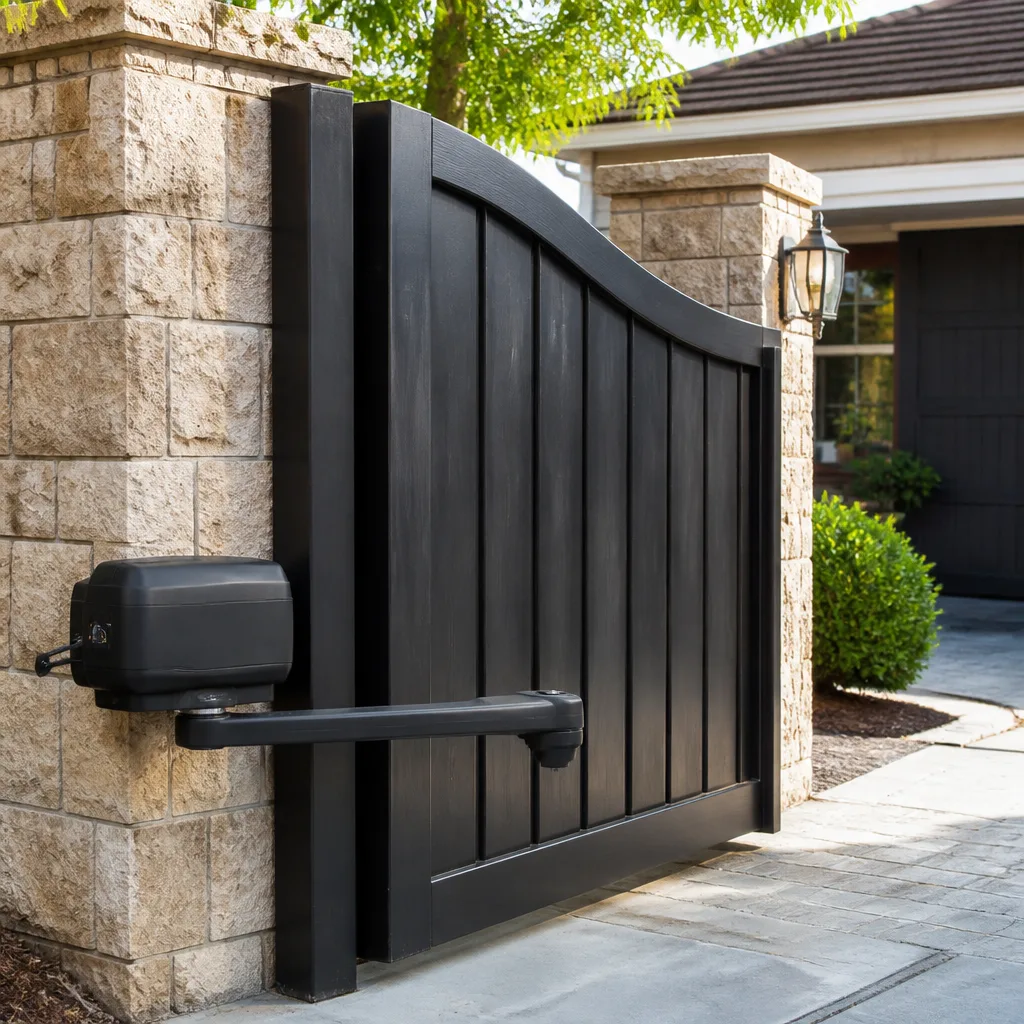
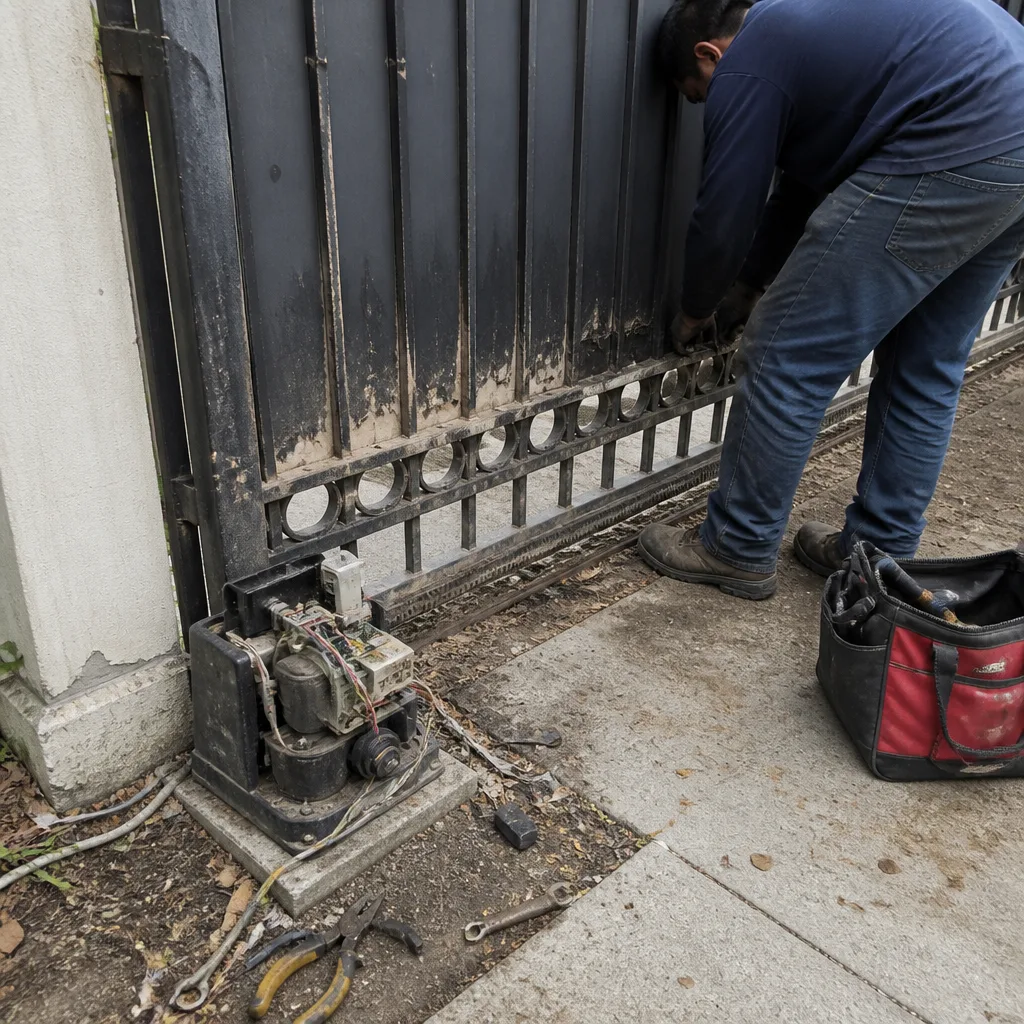 Before
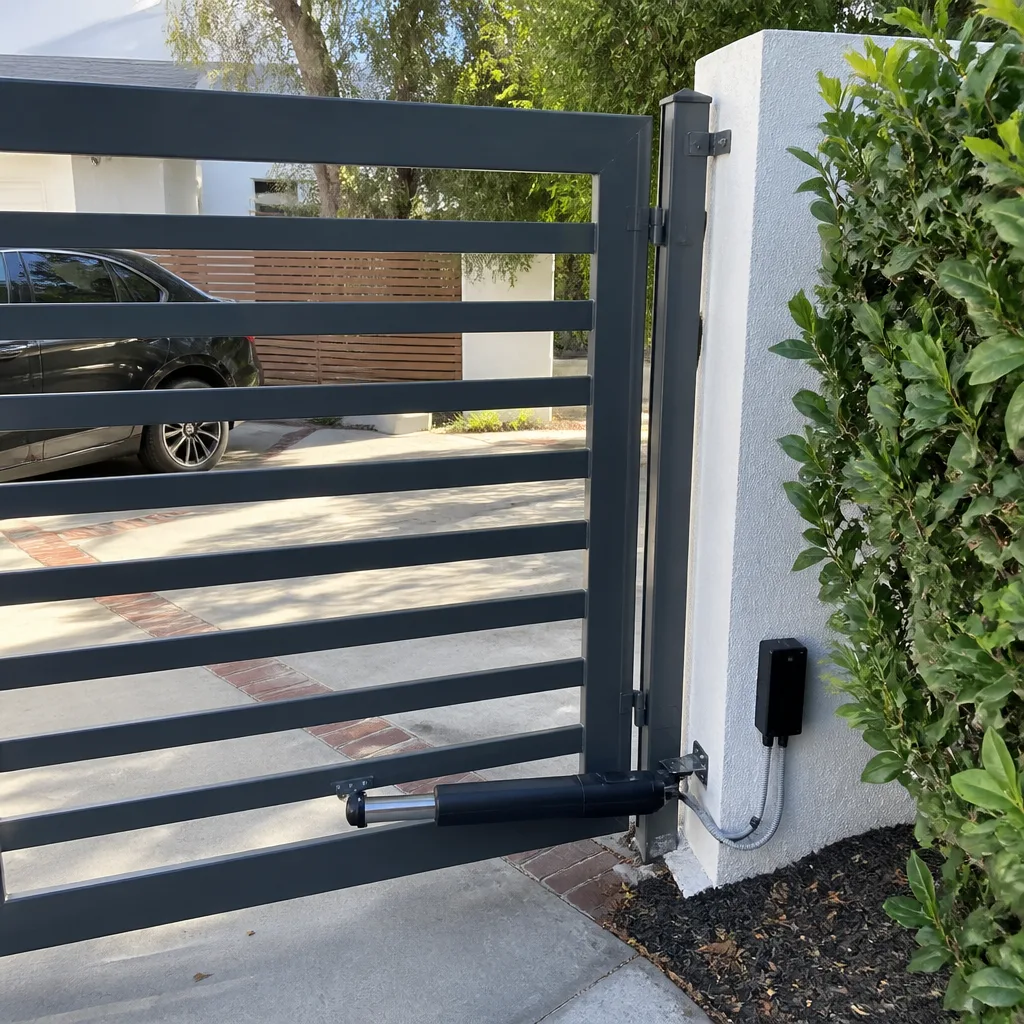 After
After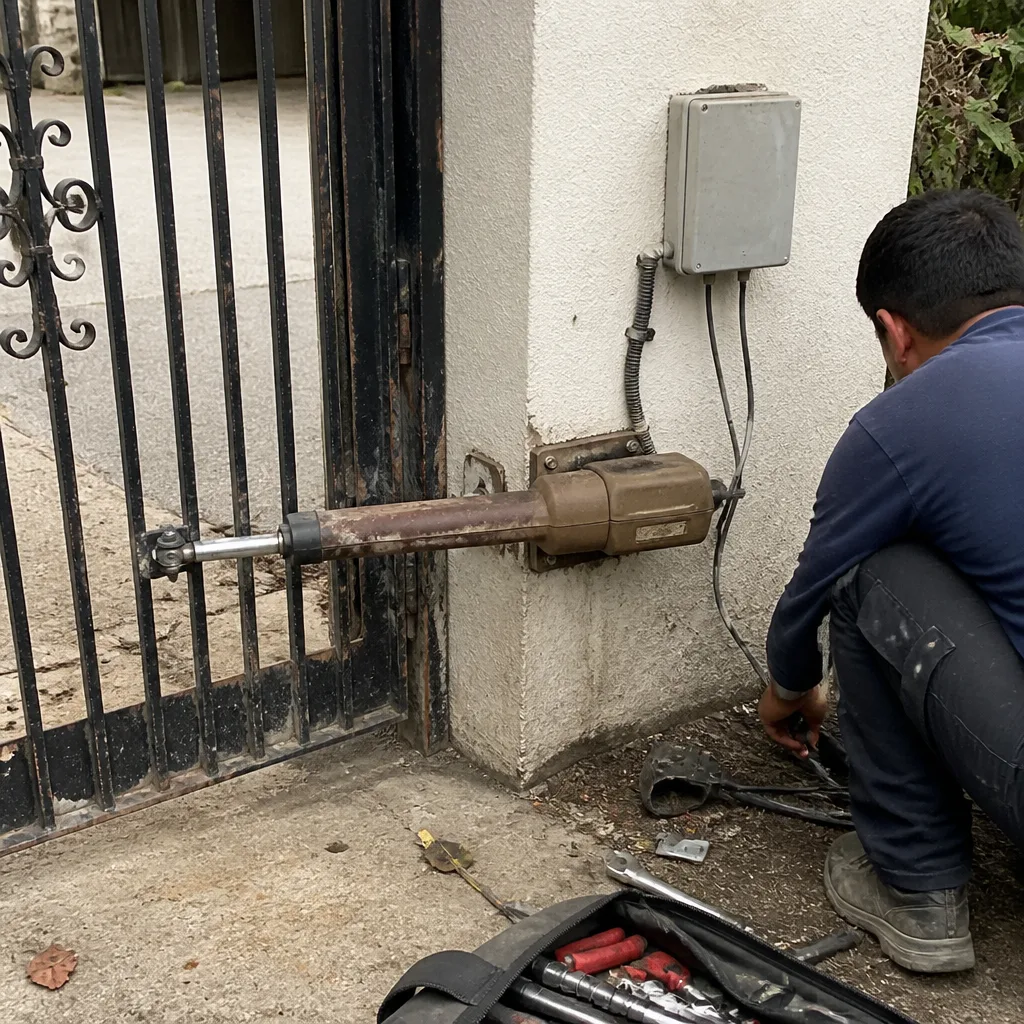 Before
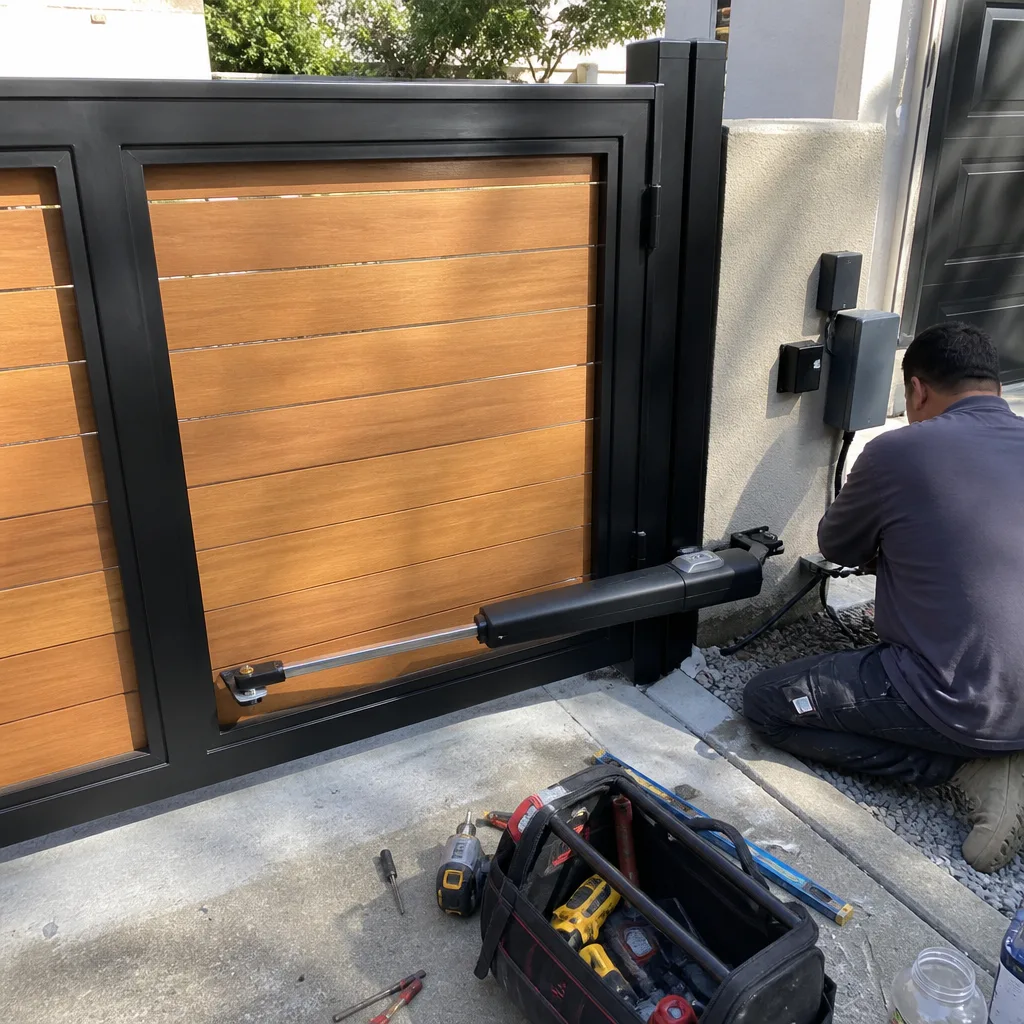 After
After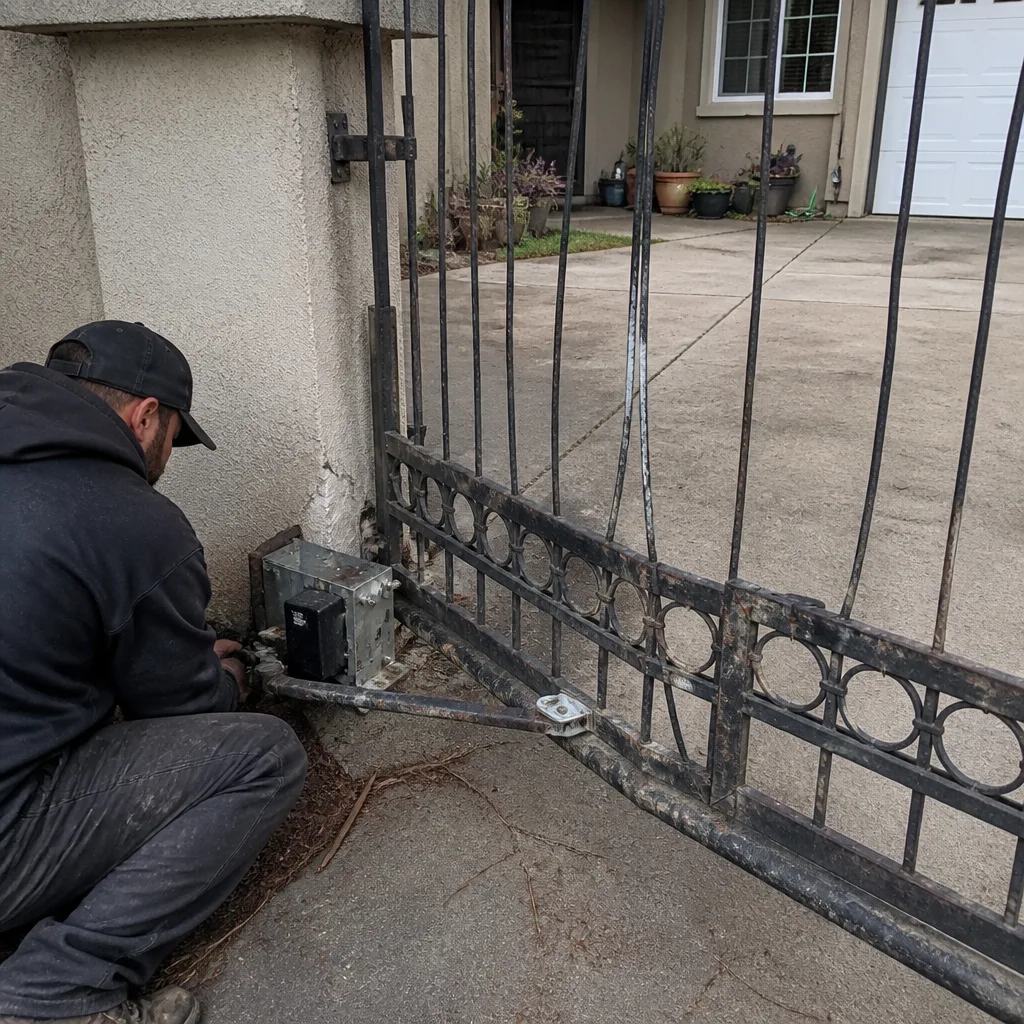 Before
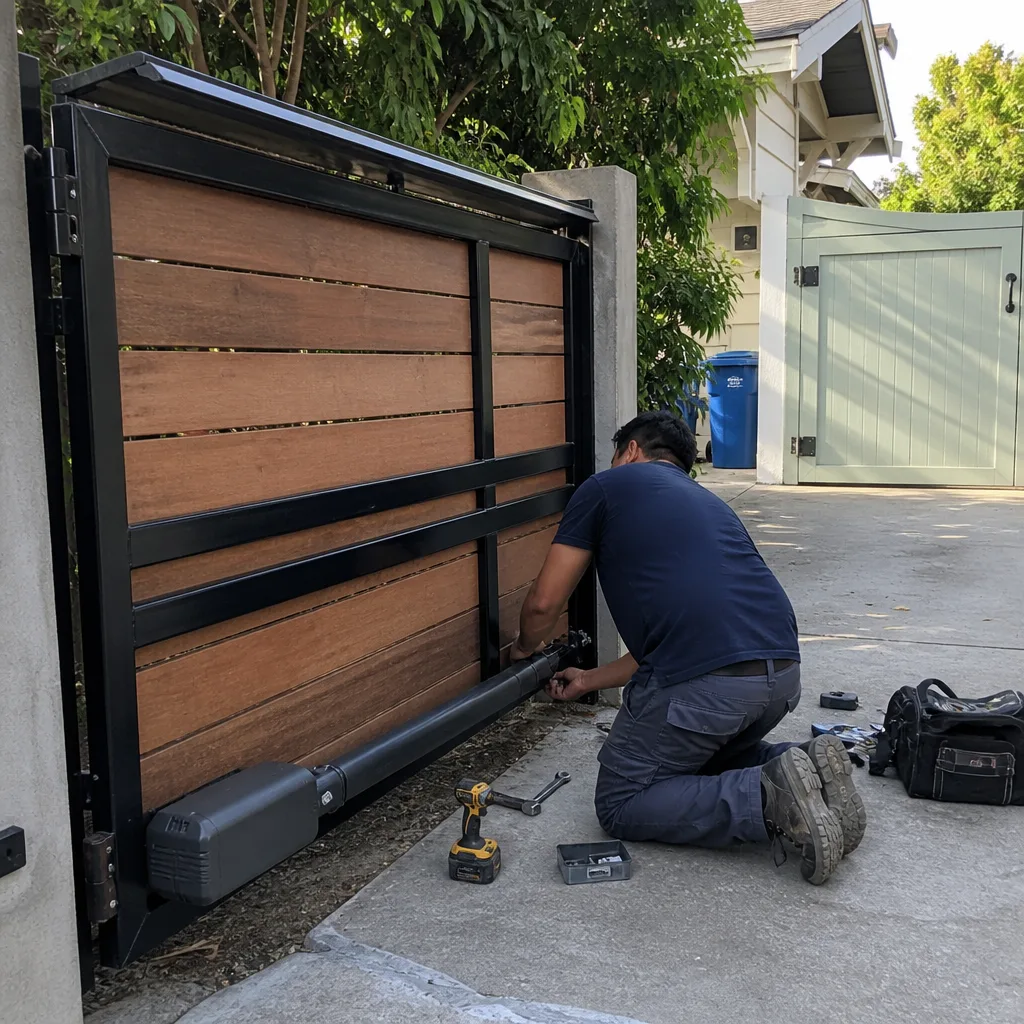 After
AfterGate Repair Warning Signs: A Culver City Homeowner’s Reference Guide
Most gate failures announce themselves weeks before they happen. A hinge that squeaks a little louder each morning, a motor that pauses for half a second longer before engaging, a chain that sags one link lower than it did last spring. The gate rarely just quits. It signals. And in Culver City, where driveways on streets like Higuera, Braddock, and Farragut see daily use and the coastal air works on metal year-round, those signals come earlier than homeowners expect. This guide walks through the warning signs we’ve learned to read over 42 years of gate work, what each one means, what it costs to fix now versus later, and when the right move is to stop watching and start calling.
Quick Answer
The most common gate repair warning signs in Culver City are squealing or grinding noises during operation, a gate that slows down or hesitates, sagging or misaligned leaves, rust bleeding through the finish, and opener motors that run but don’t move the gate. Most of these issues cost between $150 and $400 to fix when caught early, and nearly all of them become significantly more expensive if ignored for six months or more.
Table of Contents
- Warning Sign 1: Noise That Wasn’t There Last Month
- Warning Sign 2: A Gate That’s Getting Slower
- Warning Sign 3: Sagging, Dragging, or Misaligned Leaves
- Warning Sign 4: Rust and Finish Failure
- Warning Sign 5: Motor Runs, Gate Doesn’t Move
- Warning Sign 6: Intermittent Keypad and Remote Issues
- Warning Sign 7: Safety Edges and Sensors That Stop Working
- Common Mistakes to Avoid
- When to Call a Professional
- Frequently Asked Questions
- The Bottom Line
Warning Sign 1: Noise That Wasn’t There Last Month
Gates make noise. That’s normal. What isn’t normal is a noise that changes. A homeowner who has lived with the same gate for ten years knows its sounds the way they know the sound of their own front door. When the pitch changes, when a new squeal appears, when the gate starts to grind instead of hum, something mechanical has shifted.
Here’s what specific noises typically mean in our experience:
- Squealing or high-pitched screeching: Dry bearings, a worn pulley, or a hinge that needs lubrication. This is the cheapest fix on this list and the most commonly ignored. In Culver City’s dry summers, lubricant breaks down faster than in more humid climates.
- Grinding or metallic rasping: Metal-on-metal contact that shouldn’t be happening. Sometimes it’s a wheel dragging on the track. Sometimes it’s a sprocket eating into a chain. Grinding means something is wearing away, and every cycle makes it worse.
- Clunking or banging at the end of travel: The gate is hitting its stop too hard. Usually a limit switch issue or a worn close stop. Left alone, this pounds the hinges and the motor mount until something cracks.
- Chattering during startup: Often a capacitor or main gear issue in the opener. The motor is struggling to overcome initial resistance, and it’s telling you so.
What makes noise a genuine warning sign rather than an annoyance is trajectory. A gate that has squeaked slightly for five years is stable. A gate that squeaks slightly in January, audibly in March, and loudly by June is degrading. That’s the one to act on. The noise itself isn’t dangerous, but the mechanical condition causing it will eventually become dangerous, or at minimum expensive.
A homeowner can safely check a few things without touching the gate mechanism itself: listen for where the sound originates, note whether it happens on opening, closing, or both, and check whether it changes after a rain shower. That’s useful diagnostic information to have ready when calling for service. What a homeowner should not do is reach into the gate track or near the chain while the gate is moving, or try to lubricate the opener motor internals. The moving linkage between the motor and the gate, particularly with chain-driven systems under tension, can cause serious injury if the gate is energized.
In Culver City neighborhoods like Carlson Park and Veterans Park, homes sit close together, and gate noise becomes a shared annoyance. A neighbor who mentions the screech at the mailbox isn’t being fussy. They’re providing an early warning system that costs nothing to heed.
Warning Sign 2: A Gate That’s Getting Slower
A slowing gate is a gate that’s working harder than it should. Homeowners often adapt to a gradually slowing gate without noticing it, the same way a person adapts to a dimming porch light. Then a guest opens the gate and says, “Has it always taken that long?”
The typical causes, in order of how often we see them in Culver City:
- Dirty or dry rollers and track: A sliding gate rides on wheels in a track. That track collects decomposed granite, leaves, irrigation overspray, and fine coastal dust. The wheels get sticky. The motor strains against the resistance. The gate slows.
- Worn drive belt or chain tension: A chain that’s too loose slips on the sprocket. A chain that’s too tight drags on the bearings. Both slow the gate. Ghost Controls and Mighty Mule openers sold for the residential market have tension ranges specified by the manufacturer, and when a gate has been adjusted by a previous owner or a generalist handyman, the tension is often wrong in one direction or the other.
- Declining capacitor or motor bearings: The capacitor is the component that gives the motor its starting kick. When it weakens, the gate starts slowly, or not at all without a push. Motor bearings wear out steadily, and the motor runs hot while producing less useful movement.
- Gate weight distribution change: If a leaf has been damaged, had a panel added, or accumulated water inside a hollow frame, the gate gets heavier. The motor is sized for the original weight. The extra load slows everything and shortens the opener’s life dramatically.
Speed matters for more than convenience. A slow gate cycles the motor longer on every open and close, which means more heat, more wear, and a shorter lifespan for the most expensive component on the driveway. A gate that was designed to cycle in 12 seconds and now takes 20 is putting roughly 65% more run time on the motor. Over a year of daily use, that’s the difference between an opener that lasts eight years and one that fails in five.
Homeowners should also pay attention to asymmetry: a gate that opens normally but closes slowly, or that starts fast and crawls to the finish. Asymmetric behavior points to specific failure, usually a limit switch calibration issue or a problem internal to the opener’s control board. That’s a repair diagnostic, not a permanent condition.
The test is simple. Time the gate. Use the stopwatch on a phone. Then time it again a month later. A consistent 20-second cycle is a slow gate that’s always been slow. A cycle that’s gone from 15 to 18 to 21 seconds is a gate that’s failing in real time.
Warning Sign 3: Sagging, Dragging, or Misaligned Leaves
A steel gate is heavy. A Culver City driveway gate made of welded steel and wood infill can weigh 400 to 800 pounds per leaf. That weight sits on hinges, and hinges are metal against metal, and metal, under load, moves. It moves in tiny increments over years until one day the gate doesn’t clear the driveway by two inches anymore. It clears it by half an inch. Or it drags. Or it locks correctly only when lifted slightly.
Sagging shows up in predictable ways:
- The gate scrapes the driveway as it moves: A visible arc of scrape marks on the concrete tells the story. The arc gets deeper over time because the gate is grinding itself down while it grinds the driveway.
- The gap at the top of the closed gate is uneven: Stand at the curb and look at the top line of a closed double gate. If one leaf tilts, the two top edges won’t align. One of them is sagging at the hinge.
- The latch doesn’t line up with the strike plate: It used to click home easily. Now it needs a shove, a lift, or a jiggle. The leaf has dropped enough that the hardware no longer lines up.
- The gate drifts open or closed after being released manually: A gate that’s true will stay where you leave it. A sagging gate glides to the position its worn hinges permit.
Hinges fail from the bottom up in most cases. The lower hinge carries more shear load and is closer to irrigation moisture and splashback from rain. Once the lower hinge wears, the upper hinge takes a load it wasn’t designed for, and the wear accelerates. On a gate that swings freely today, the change from “slightly loose” to “dangerously unstable” can happen in a single season.
Sagging is a mechanical repair, not a finish repair. A gate that sags needs hinge replacement or hinge reinforcement, sometimes a corner brace, occasionally a post reset if the post itself has moved. In Culver City, where many homes were built in the 1940s and 1950s, the original gate posts are often set in concrete that has cracked or settled over decades. A new hinge on a moving post is a temporary fix. The post has to be addressed or the new hinge will fail the same way the old one did.
We recommend against homemade fix attempts on a sagging gate. Putting a wedge under the free corner or shimming the hinge creates point loads that end up bending the gate frame or tearing the hinge mounts. And any work that involves removing or loosening a hinge on a swinging gate carries the risk of the leaf falling. An 800-pound piece of steel that suddenly drops is doing so with enough force to break bones or worse.
Warning Sign 4: Rust and Finish Failure
Culver City sits east of the coast but still in the marine layer belt. That means morning fog and damp nights during a good part of the year. Steel doesn’t need to be drenched to rust. It needs moisture and oxygen, and the daily condensation cycle provides both in steady supply. The difference between a gate in Culver City and the same gate in Palm Springs is measured in years of paint life.
Rust rarely starts with a visible orange bloom. It starts with bubbles. Or with paint that lifts at the edges of welds. Or with small brown specks that look like dirt but smear orange when rubbed with a damp rag. Here’s how the progression typically runs:
- Stage 1: Micro-breaks in the finish. Scratches, stone chips, weld edges, and hinge points lose their paint coverage. Bare steel is exposed to condensation.
- Stage 2: Subsurface oxidation. Rust grows under the paint, which is why it bubbles. The paint is still on top, but the metal underneath is deteriorating.
- Stage 3: Visible rust and scaling. The surface rust is now obvious. At this point, the structural metal underneath is compromised in the affected areas.
- Stage 4: Penetration and section loss. The rust has eaten into the wall thickness of the tube or plate. This is when gates develop pinholes, soft spots, and eventually cracks at stress points.
The repairs differ dramatically by stage. Stage 1 rust is addressed with surface prep and touch-up or localized refinishing. Stage 2 requires stripping back to bare metal before coating. Stage 3 usually means cutting out the affected section and welding in new material. Stage 4 can mean replacement of structural members or, in the worst cases, replacement of the gate leaf.
A homeowner in Culver City doesn’t need to know how to repair rust. They need to know how to find it early. The underside of the bottom rail is where it hides. So are the insides of horseshoe hinges, the base of welded gate posts, and the back of any decorative element that traps moisture. A flashlight and a once-a-year inspection, especially in March after the dampest months, catches most rust before it becomes structural.
The one nuance worth knowing: some rust is cosmetic and some is load-bearing. Rust at a non-structural decorative edge is an appearance matter. Rust at a hinge weld, a post base, or the corner of a gate frame is a structural matter. The structural rust is the one that turns a $150 surface repair into a $900 weld-and-rebuild job, and the only way to know which kind of rust you have is to have a welder look at it.
Warning Sign 5: Motor Runs, Gate Doesn’t Move
This is the failure that produces the most frustrated phone calls, because from a homeowner’s perspective everything seems to be working. The motor hums. The lights on the opener blink. The remote works. But the gate sits still. What’s happened is a disconnection between the motor’s output and the gate’s movement, and there are four common causes.
The chain or belt has slipped off or broken. On chain-driven openers like many DoorKing and Elite models that serve Culver City homes, the chain is the connection. If the chain breaks, the motor runs freely and the gate doesn’t respond. If it slips off the sprocket, the same thing happens with a different noise.
The drive gear inside the opener has stripped. This is common on older units. The motor turns a gear train, and the final gear is often plastic or a softer metal designed to be sacrificial. When the gate has been overloaded for years, the gear teeth shear off. The motor spins, the gear doesn’t drive.
The clutch is disengaged or worn out. Many openers have a manual release clutch that allows disconnecting the gate from the motor for manual operation when power is out. If the clutch is partially engaged or worn, it can slip. The motor runs, the gate does nothing.
The limit switch has failed in the open position. A limit switch tells the opener when the gate has reached its travel. If a switch fails, the control board can get confused about gate position and refuse to energize the drive, even though the motor hums briefly.
Here’s the honest danger of this particular warning sign: a homeowner who hears the motor run and sees the gate not move will often try the remote again. And again. And then disconnect and reconnect the manual release. None of this is dangerous in isolation, but repeated failed cycles overheat the motor, strip whatever remains of the gears, and can burn out the capacitor. A single failed cycle is a diagnostic. Twenty failed cycles is a self-inflicted repair bill that’s larger than it needed to be.
When this symptom appears, the right move is to put the gate in manual mode if it moves freely by hand, leave the opener off, and call for service. The diagnostic is usually quick: a technician checks the chain condition, the gear train, the clutch, and the limit switches in that order. In many cases, the repair is a chain, a gear, or a switch replacement, and the opener is back in service the same visit. In others, the opener has reached the end of its service life and replacement of the motor unit is the honest recommendation.
Warning Sign 6: Intermittent Keypad and Remote Issues
Few gate problems are more maddening than intermittent electronics, because they never happen when a technician is standing in the driveway. The gate opens fine for three days. Then it doesn’t respond to the remote. Then it does again. The keypad works at noon but not at 7 AM. The pattern is elusive, but in our experience, intermittent behavior has a cause, and the cause is findable.
Here are the patterns we see in Culver City:
- Range-dependent remote failure: The remote works when the car is close to the gate but not from the street. This is usually an antenna or receiver issue on the opener, or interference from something that has changed in the area. New LED bulbs, a new wifi mesh system, or even a neighbor’s new opener can create interference in the 300 to 400 MHz bands these systems use.
- Morning dew failures: The gate works all day but refuses the remote in the early morning. Condensation is getting into a connection, a receiver housing, or a keypad enclosure. The water creates a temporary short or resistance change. Culver City’s marine layer makes this failure mode more common here than in most of Los Angeles County.
- Low-voltage power supply decline: The opener is getting power, but not enough. The transformer weakens over time. The control board becomes marginally functional. It works when conditions are perfect and fails when they aren’t.
- Capacitor degradation in the remote: The remote sends a weak signal. The gate opens sometimes. Replacing the remote battery with a fresh one doesn’t always fix it if the remote’s own board is aging.
- Photoelectric sensor alignment drift: For gates with safety sensors across the driveway, a sensor that’s slightly out of alignment can refuse to close the gate reliably while letting it open. Homeowners interpret this as “the remote is broken” when the remote is fine and the safety circuit is doing exactly what it’s designed to do.
The diagnostic approach that works is systematic, not guesswork. First, determine whether the problem is remote-specific (does the keypad work when the remote doesn’t), then whether it’s environmental (does it correlate with dew, heat, or time of day), then whether it’s positional (does the gate work from the keypad when it won’t work from the car). A technician who knows Ghost Controls and Mighty Mule systems, both of which are common on Culver City residential gates, will recognize the failure signatures without spending an hour chasing ghosts.
Intermittent electronics is one category where waiting to see if it gets worse is a legitimate strategy for a short period, but only if the gate can still be operated manually when needed and the security of the closed gate isn’t compromised by the failure. If an intermittent keypad sometimes leaves the gate open, or sometimes traps a car inside, that’s not an inconvenience anymore. That’s a repair priority.
Warning Sign 7: Safety Edges and Sensors That Stop Working
Modern driveway gates are required to have safety devices: photoelectric sensors that detect an obstruction across the gate path, and safety edges or pressure sensors on the leading edges of the gate leaves that reverse the gate if they contact something. These devices are not accessories. They are the difference between a gate that closes and a gate that closes on something. A gate leaf weighing several hundred pounds, driven by a motor, can cause serious injury or death if the safety system fails.
The warning signs that safety devices are degraded or non-functional:
- The gate doesn’t reverse when an object is in its path: The single most important test a homeowner can perform. With supervision, place a lightweight object like a trash can or a cardboard box in the gate’s path and close the gate. It should stop or reverse before or immediately upon contact. If it doesn’t, the safety system is compromised.
- The photoelectric sensor LED indicators don’t change state when blocked: Most sensors have indicators that show alignment and beam status. If blocking the beam doesn’t change the indicator, the sensor isn’t registering anything.
- A damaged or dented leading edge on the gate: If the gate leaf has visible damage on its leading edge, the edge has made contact with something at some point. The safety edge may have been damaged in that same incident.
- The gate closes with more force than it used to: A properly functioning gate slows before the end of travel and closes gently. A gate that slams shut has lost its deceleration logic or its safety edge is no longer registering contact.
Safety-edge failure is not a maintenance issue. It is a “call today” issue. A gate that closes on a person, a pet, or a car does damage far beyond what any repair costs. The UL 325 standard that governs automatic gate safety in the United States exists because people have been killed by gates that lacked working safety devices. Every manufacturer, from LiftMaster to DoorKing, designs around these safety requirements, and every opener’s proper operation depends on those sensors and edges being connected and calibrated.
Testing is something a homeowner can do safely as long as they stay out of the gate’s path themselves. Use an inanimate object. Never test with a hand, a foot, or a child’s bike while the child is on it. And if the gate fails the test, disable the automatic function and operate the gate manually until it’s repaired. The manual release on most openers is accessible and clearly marked, and a gate that’s operated by hand with the motor disengaged won’t close under power.
Common Mistakes to Avoid
- Greasing the chain without tension adjustment. A loose chain that’s lubricated is still loose. Lubrication reduces noise, which makes a homeowner feel like the problem is solved while the chain continues to wear the sprocket. Tension adjustment comes first, lubrication second.
- Ignoring a sagging gate because it “still works.” Sag is geometric. It gets worse monotonically. Every open-close cycle with a sagging leaf adds wear to the hinges, the motor, and the gate frame itself. The gate still works right up until the day it doesn’t, and that day is usually the day a hinge tears out of the post.
- Repeatedly trying a failing opener. A motor that runs but doesn’t move the gate is either mechanically disconnected or electrically degraded. Repeated trials amplify the heat damage and turn a repairable failure into a replacement. Try once, then stop and call.
- Painting over rust without removing it. Rust is active corrosion. Paint over active rust does nothing except hide the visible symptom while the corrosion continues underneath. It’s a cosmetic move on a structural problem.
- Watching a slowing gate for a year. The slow gate is burning through its opener motor on every cycle. The difference between a six-month-old slowdown and an eighteen-month-old slowdown is often the difference between a $200 part and an $800 opener replacement.
- Bypassing a non-functional safety sensor. Tempting, done with a jumper wire or a switch on the control board, and genuinely dangerous. The sensor exists because someone in the industry’s past lost a child or a pet or a mail carrier. It’s a safety system, not an inconvenience.
- Hiring by price instead of specialty. A Culver City driveway gate with an automation system is a specialized piece of equipment. A generalist handyman who “does gates too” might replace a hinge acceptably, but when the problem is in the control board of a DoorKing or a Linear opener, the right tool is diagnostic knowledge, not a socket set. The cheaper quote on a gate that’s still wrong a month later is the expensive one.
When to Call a Professional
Some gate issues are simple enough for a homeowner to observe and live with temporarily. Others are not. Call a professional when the gate is sagging enough to scrape the driveway, when the motor runs without moving the gate, when rust has reached visible scaling or penetration, when the safety edges or photoelectric sensors don’t work, or when the gate has become intermittent in a way that leaves it open or traps a car inside. Any of those marks the transition from “watching it” to “fixing it.”
Honest assessment also matters. A homeowner who has been nursing a gate for two years has usually spent more in accumulated time, frustration, and temporary fixes than the repair would have cost in year one. Ironworks Gate Co. serves Culver City and the surrounding area with free estimates on gate repairs, and every job is priced before work starts and protected by our written 90-Day Done Right Promise. Call (619) 350-4659 and a live person will answer, day or night.
Frequently Asked Questions
Most gate repairs in Culver City run between $150 and $400 for common fixes like hinge lubrication, chain tension adjustment, limit switch calibration, and safety sensor realignment, while more involved repairs like hinge replacement, weld repair, gear replacement, or opener replacement typically run from $400 to $1,500. The price depends on the gate’s size, the specific opener brand involved, and the extent of the mechanical wear. Call (619) 350-4659 for a free estimate with the exact price agreed before any work begins.
Yes, a motor that runs without moving the gate is usually fixed the same day by addressing the chain or belt, the drive gear, the clutch, or the limit switch, depending on which component has failed. This is one of the most common repair calls we handle in Culver City, and most of these repairs are completed in a single visit.
A properly installed and maintained gate opener in Culver City typically lasts 8 to 12 years, with the coastal marine layer and daily use being the two factors that shorten that lifespan the most. Openers from manufacturer brands like Ghost Controls, DoorKing, and Mighty Mule all have different duty cycles and component quality, and an opener that’s undersized for its gate will fail earlier than one that’s correctly matched.
Yes, we service residential and estate gate openers across nine major brands including Ghost Controls, DoorKing, Elite, and Mighty Mule, among others. We’re factory-trained on the full range of LiftMaster, FAAC, BFT, Linear, and Viking systems as well, so the correct repair is made on the first visit regardless of what’s installed on the driveway.
A sagging gate should be treated as a structural issue, and if the sag is bad enough that the gate drags on the driveway or the hinges show visible movement, the gate should be operated manually or left in a fixed position until it’s repaired. A gate leaf that’s sagging heavily is stressing its hinges and motor on every cycle, and a hinge that tears out under load releases the leaf suddenly.
Yes, estimates for gate repair are free in Culver City and the surrounding area, and the price you’re quoted is the price you pay, settled before any work starts. Call (619) 350-4659 and a live person will answer, 24 hours a day, 7 days a week, to schedule the estimate.
The Bottom Line
A gate’s warning signs are consistent and readable. Noise precedes wear. Slowness precedes strain. Sag precedes structural damage. Rust precedes penetration. Motor trouble precedes total failure. The homeowner who catches these signals early pays a repair bill measured in the low hundreds. The homeowner who waits pays measured in the thousands, and sometimes a replacement instead of a repair. In Culver City, where the coastal air makes every steel component work harder, the inspection should be annual and the response should be prompt. When the signs appear, the right answer is a call to someone who does this work every day and stands behind it in writing.
Written by Victor Salinas, Owner at Ironworks Gate Co., serving Culver City since 2013.