
Last updated August 25, 2026
Free on-site gate assessment - hinges, posts, and your LiftMaster or Nice gate operator checked before anything is quoted
The assessment is free and the quote is the invoice.

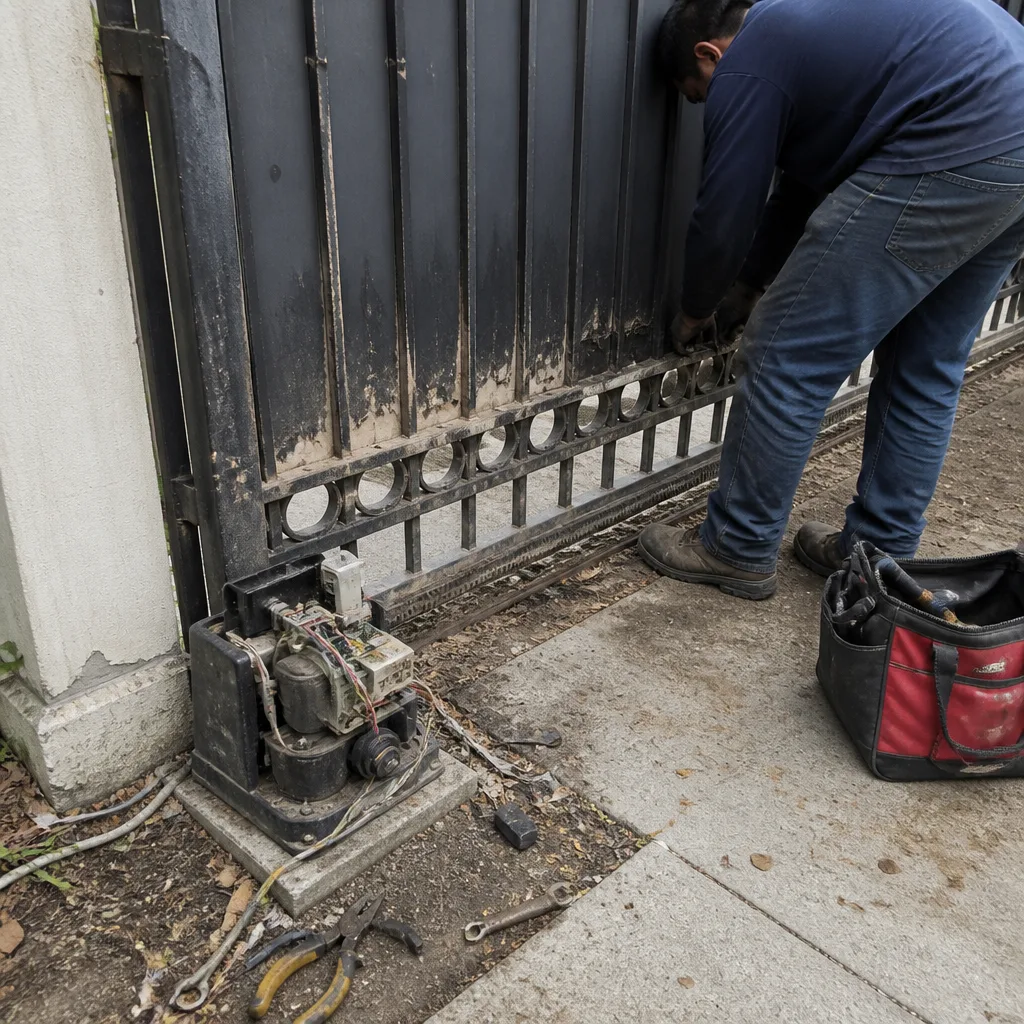 Before
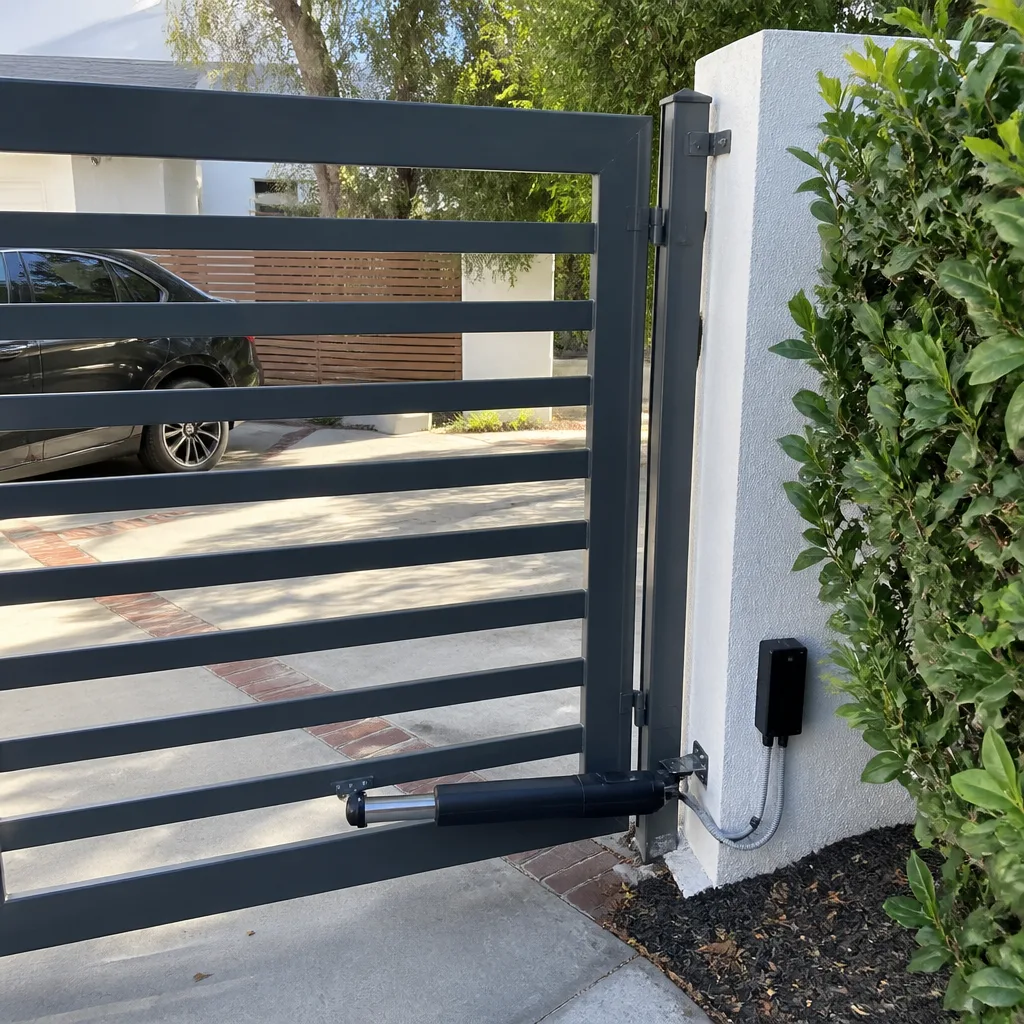 After
After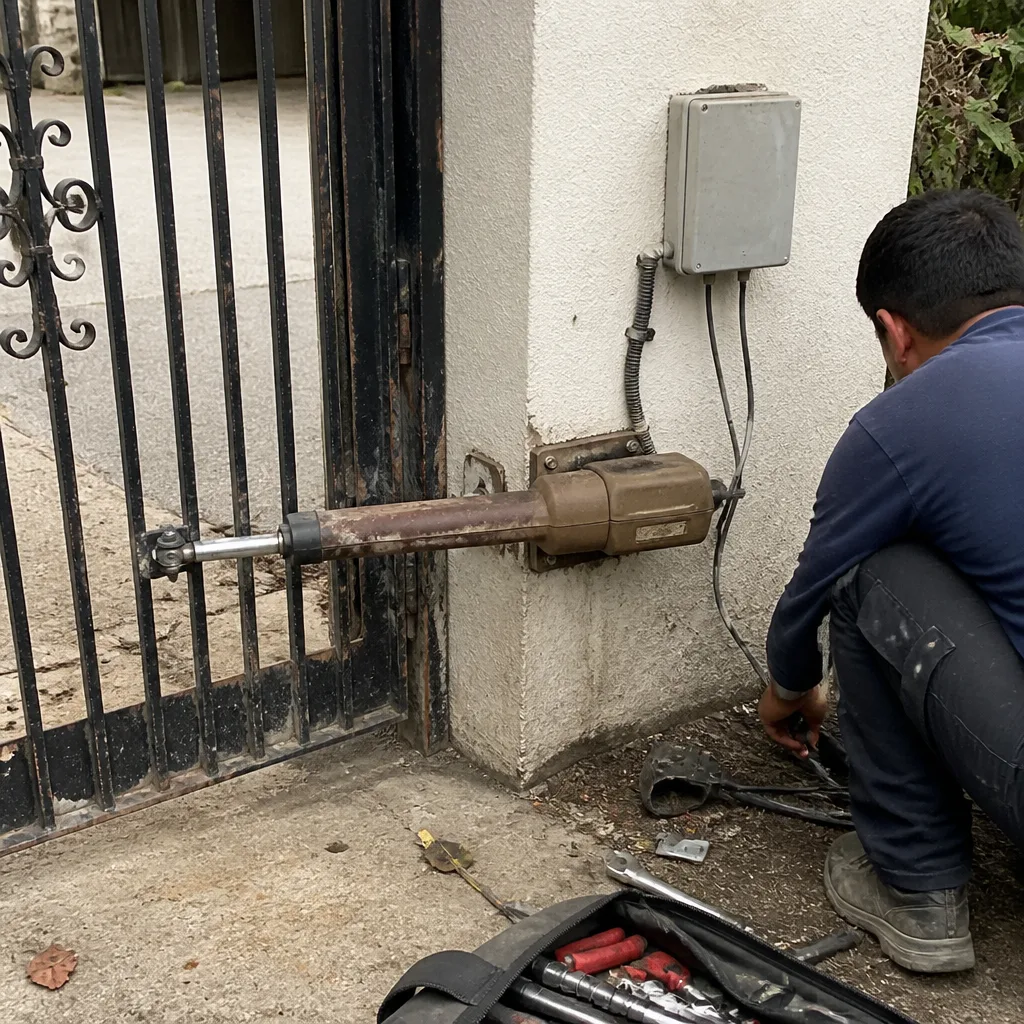 Before
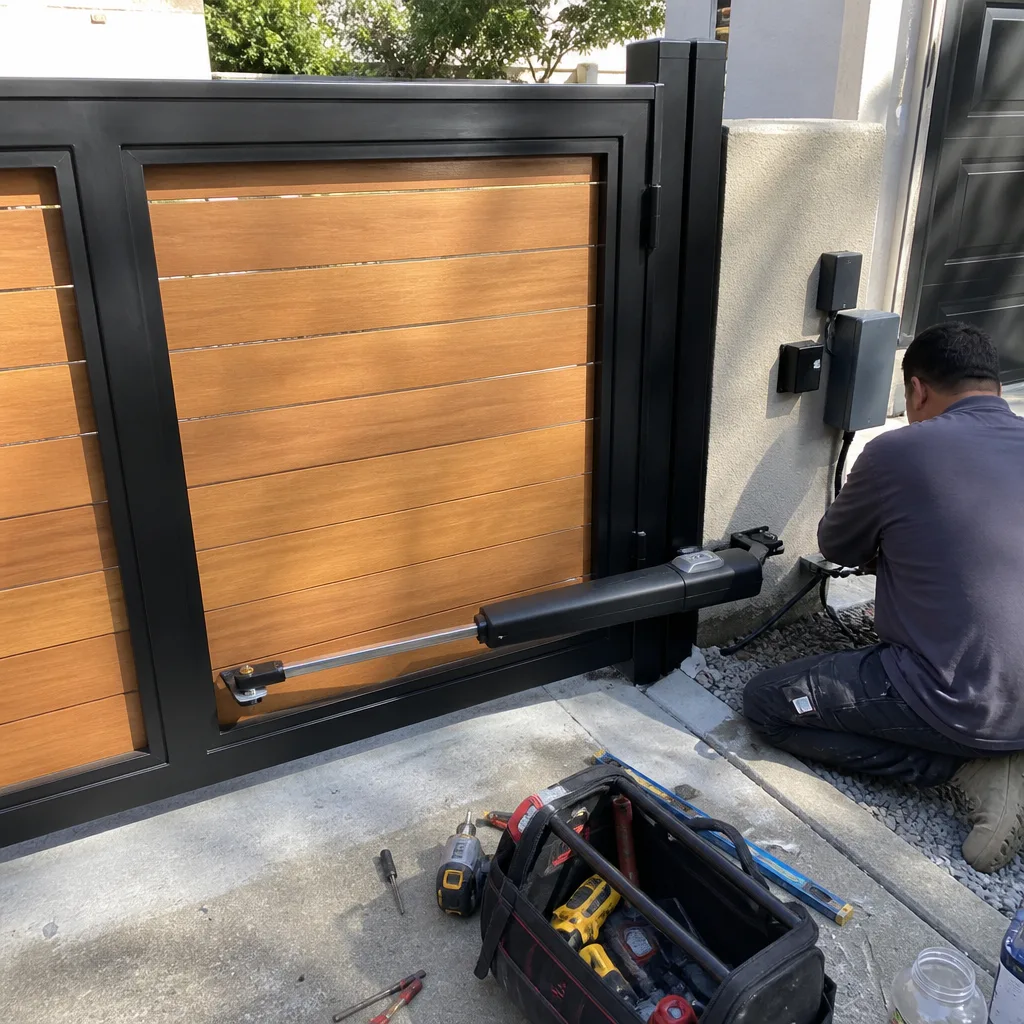 After
After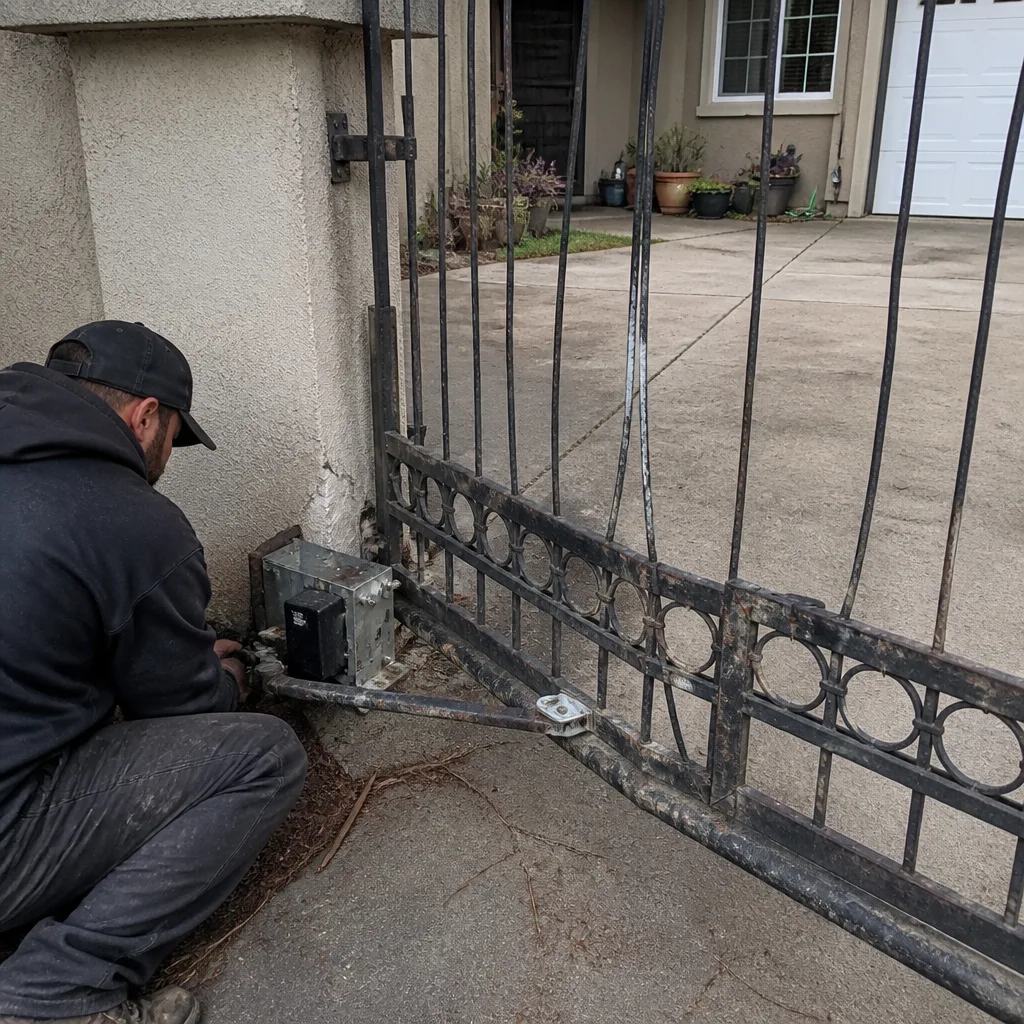 Before
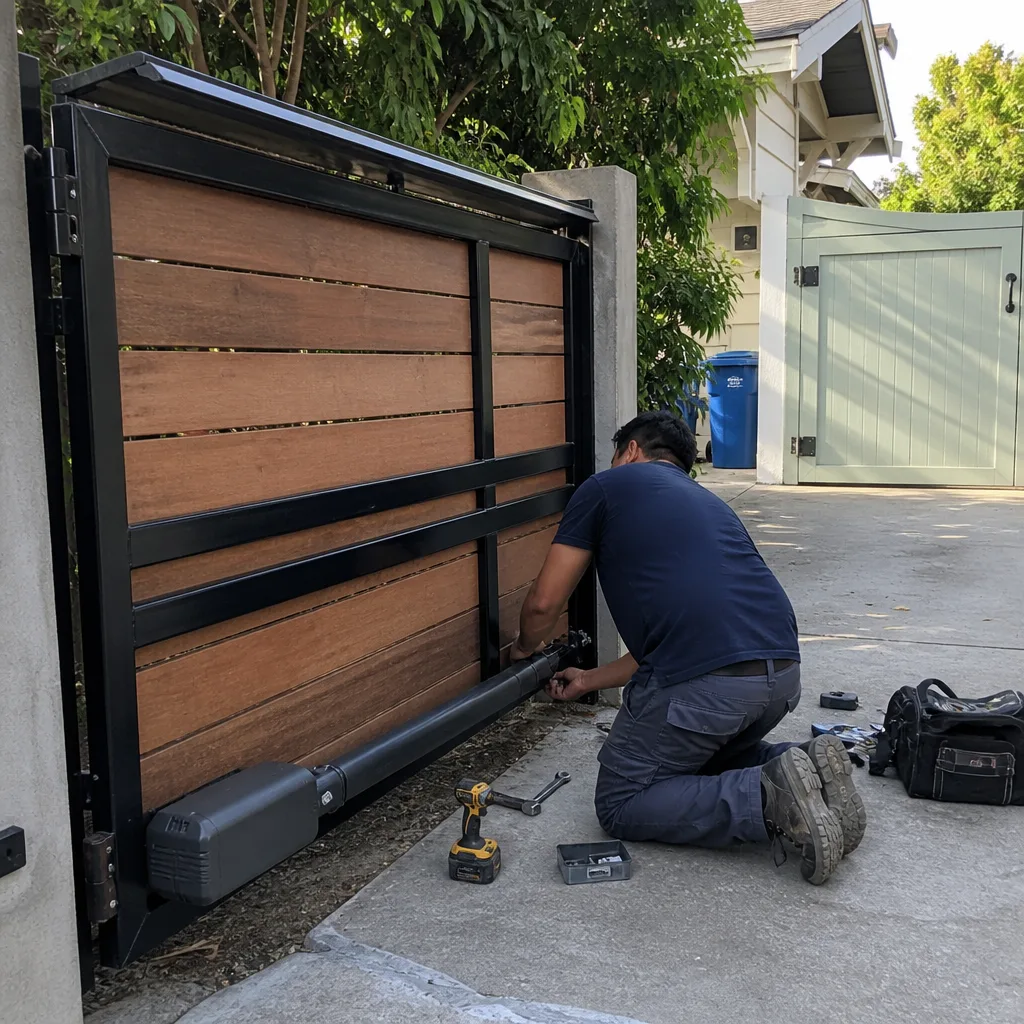 After
AfterDIY vs Professional Gate Repair: The Culver City Homeowner’s Decision Guide
Here’s a number that surprises most Culver City homeowners: a standard driveway gate operator cycles somewhere between 1,500 and 2,000 times a year. Every open, every close, every late-night return from Sepulveda Boulevard adds up. The average gate in this city is now older than the car sitting behind it. Most homeowners only think about the gate when it stops working, and by then, the question isn’t whether it needs repair, it’s whether the repair is something they can handle themselves. This guide walks you through that decision honestly: what’s genuinely fixable on a Saturday afternoon, what isn’t, and what Culver City’s specific conditions mean for the gate standing in your driveway right now.
Quick Answer
For most Culver City homeowners, DIY gate repair is only worth attempting for simple cosmetic issues, like cleaning sensors or replacing a keypad cover. Anything involving the motor, the springs, the hinge welds, the control board, or the safety features should be handled by a professional. The reason isn’t just skill; it’s safety. A driveway gate carries enough tension and weight to break bones, and the automation adds electrical risk on top of that. If your gate isn’t opening or closing properly, the fastest safe answer is a professional diagnosis, and in Culver City, that diagnosis is usually free.
Table of Contents
- What You Can Realistically Fix Yourself
- What You Shouldn’t Touch: The Dangerous Side of Gate Repair
- The Real Costs of DIY Gate Repair vs Hiring a Pro
- How Culver City Weather Affects Your Gate
- The Tool Question: What’s Actually in Your Garage
- The Time Tradeoff: What DIY Gate Repair Actually Costs
- Why Gate Brands Make DIY Harder Than It Looks
- Common Mistakes to Avoid
- When to Call a Professional
- Frequently Asked Questions
- The Bottom Line
What You Can Realistically Fix Yourself
Let’s be fair to the DIY approach. There are a handful of gate repairs a careful homeowner can handle without specialized training. In our experience across Culver City, from the hillside properties near Baldwin Hills Scenic Overlook to the flat streets around Veterans Memorial Park, the same simple issues come up again and again.
Here’s what’s genuinely within reach for most homeowners:
- Cleaning photo-eye sensors. Dust, spider webs, and debris accumulate on the sensor lenses. A soft cloth and a few minutes usually resolves a gate that reverses for no apparent reason.
- Replacing keypad batteries. If the keypad responds slowly or not at all, the 9-volt battery inside is often dead. This is a two-minute job with a screwdriver.
- Tightening visible hinge bolts. A gate that sags slightly may just have loose hardware at the hinge plate. Use a socket wrench and check the bolts that mount the hinge to the post.
- Lubricating hinge points. A dry hinge makes noise. White lithium grease on the hinge pins quiets it down and extends the life of the hardware.
- Clearing the track. For sliding gates, gravel, leaves, and debris in the track are common culprits. A broom and five minutes solve it.
These are maintenance items, not true repairs. They don’t require opening the operator housing, touching wiring, or dealing with tension. They’re the gate equivalent of changing windshield wiper blades: accessible, low-risk, and worth doing yourself if you’re comfortable with basic tools.
What You Shouldn’t Touch: The Dangerous Side of Gate Repair
And now the honest part. Certain gate components carry stored energy, and when that energy releases unexpectedly, it doesn’t give a warning. This isn’t drama for the sake of a service call; it’s the reality of the hardware.
Torsion springs and tension bars. A gate spring under load doesn’t look dangerous. It sits there quietly. But that spring is holding hundreds of pounds of gate weight, and if the retaining hardware gives way while you’re working on it, the result is severe hand, arm, and head injuries. A homeowner with no spring experience should never attempt to adjust, remove, or replace a gate spring. Even professionals treat gate springs with careful respect.
Operator wiring and control boards. A gate operator runs on 110V or 220V at the motor while also controlling low-voltage accessories like keypads and sensors. The combination of line voltage and a control board that costs $600 to $1,200 to replace means a wrong wire connection can cascade into a much larger repair. Call a professional for anything that requires opening the operator cabinet.
Welds and structural hinges. Most Culver City gates weigh between 300 and 800 pounds. When a hinge weld cracks, the gate starts to drag and torque. Welding repairs require a proper welder, grinding tools, and an understanding of gate geometry. A gate that breaks free and falls on a person or a car is a $10,000 mistake at minimum, and it’s far worse if a child is in the path. In our 42 years of work, we have seen every kind of DIY weld failure, and none of them were cheap to fix afterward.
The line between maintenance and repair sits right at the point where stored energy or structural load is involved. Respect that line, and your DIY projects stay safe.
The Real Costs of DIY Gate Repair vs Hiring a Pro
Culver City homeowners tend to ask the practical question first: what’s this actually going to cost me? Here’s a straight answer based on current local market rates.
DIY gate repair costs break down like this:
- Replacement keypad: $35 to $90 for the part, plus an hour of installation time.
- Replacement photo-eye sensor: $40 to $80 for a universal part, assuming the existing wiring is intact.
- Replacement hinge set: $60 to $150 for a quality set that fits a heavier gate, plus half a day of labor.
- Replacement spring: $30 to $100 for the part alone, but the danger factor and the need for precise tensioning make this a poor DIY candidate regardless of the parts cost.
- Replacement operator control board: $200 to $500 for the part, with a high chance of misdiagnosis if you’re guessing.
- Replacement operator motor: $400 to $900 for the unit, plus programming and hardware alignment.
Professional gate repair in the Culver City area typically runs:
- Diagnosis call: Free to $95, often credited toward the repair.
- Sensor or keypad replacement: $150 to $350 total, parts and labor.
- Hinge replacement and gate re-hang: $400 to $900 depending on gate weight and access.
- Spring replacement: $200 to $450, including correct tensioning.
- Control board replacement: $500 to $1,100 depending on the brand and model.
- Full operator replacement: $1,200 to $3,500 for the operator plus installation, depending on brand and gate size.
Here’s the information gain most pricing pages don’t tell you: the real cost of DIY gate repair is the misdiagnosis rate. We visit Culver City homes every month where a homeowner replaced a $75 part based on a YouTube video, only to find the actual problem was a $12 capacitor on the control board. The part wasn’t wasted, but the time was, and the original problem remained. Professional diagnosis exists specifically to prevent that circular spending.
How Culver City Weather Affects Your Gate
Culver City has a specific microclimate, and it does specific things to gate hardware. The city sits just inland from the coast, which means two conditions that accelerate gate wear: morning marine-layer moisture and afternoon sun exposure.
The moisture from the marine layer isn’t rain. It’s a fine, persistent dampness that settles on metal surfaces every night during certain seasons. Over the course of ten or fifteen years, that dampness works its way into powdered coatings and finds whatever surface isn’t fully protected. The result is exactly what you’d expect: rust at the hinge points, corrosion on exposed fasteners, and electrical gremlins in older operator boards. Homes in the lower elevations near Ballona Creek see this more than properties up on the hill, but it’s a city-wide condition.
The afternoon sun does its own damage. A black or dark-painted gate sitting in direct sun can reach 150 degrees on a summer day. That heat does two things: it degrades plastic components inside exterior keypads and sensor housings, and it causes the gate material itself to expand. A steel gate in full sun is measurably longer than the same gate at midnight. When homeowners set their opener limits in July and the gate drags in December, that’s thermal expansion, not a failing motor.
What this means for the DIY question: Culver City gate problems are often seasonal and environmental, not mechanical. A homeowner who doesn’t know that will chase a phantom problem with new parts. A local technician who works in this specific climate understands the pattern before touching a single bolt.
The Tool Question: What’s Actually in Your Garage
Every gate repair guide should address the tools honestly, because most of us don’t own the ones that matter. We’re not talking about a socket set and a screwdriver; those are enough for the maintenance tasks listed above. We’re talking about the tools that separate a gate repair from a gate accident.
Here’s what professional gate repair requires on a typical job:
- A multimeter. Not the $10 one from the auto parts store. A real multimeter that tests continuity, voltage, and resistance on both AC and DC circuits. Gate operators have both. Without a multimeter, you’re guessing at electrical problems, and guessing at line voltage is how shocks happen.
- A torque wrench. Gate hinge bolts, spring hardware, and operator mounts require specific torque values. Under-tighten and the gate sags. Over-tighten and you strip or snap the fastener.
- Spring-winding bars. For any spring work, these are non-negotiable. Using screwdrivers or pry bars as substitutes is how fingers get removed. Even with the right bars, the procedure requires training in how tension releases.
- A welder. Not a cheap flux-core unit from a big-box store. Repairing a cracked gate frame or hinge plate means a MIG or TIG welder with enough amperage to penetrate the material thickness, plus a grinder for prep and cleanup.
- Brand-specific programming tools. This one surprises homeowners. Modern gate operators from brands like LiftMaster and DoorKing have diagnostic modes, limit-setting protocols, and force-adjustment procedures that live in the installation manual, which most homeowners don’t have. Some brands require proprietary programming sequences to reset after a board replacement.
If your tool collection stops at item one or two, that’s not a criticism. It’s a functional boundary. The gate repair that needs a welder or a spring bar needs a professional, full stop. Most Culver City garages are set up for car maintenance, not gate work, and there’s no shame in that.
The Time Tradeoff: What DIY Gate Repair Actually Costs
Time is the invisible line item on every DIY project, and gate repair is worse than most. Here’s a realistic breakdown of what a Culver City homeowner faces on a typical repair.
First comes the research. Watching a few videos, reading forum threads, identifying the operator model (which involves taking off the cover and reading the nameplate), and ordering parts takes two to four hours before a single tool comes out. Then comes the actual work. A simple sensor or keypad replacement might take 30 to 90 minutes for a first-timer. A hinge replacement on a heavy gate takes half a day if nothing goes wrong, and something always goes wrong. A spring job shouldn’t be attempted at all, but if it is, it’s a full day with a real chance of an urgent care visit.
Add partial-diagnosis time. The homeowner opens the operator, reads the blinking LED, looks up the code, guesses, orders a part, waits three to five days for shipping, installs it, and discovers the gate still doesn’t work. That’s a week of frustration for the same outcome a professional reaches in 45 minutes.
There’s also the window problem. A gate that’s stuck in the open position in Culver City is an invitation. It’s a signal to anyone driving down the street that something is broken, and a gate that’s been sitting open for three days while a part ships is three days of potential intrusion. Neighborhoods across Culver City, from Studio Village to Blanco-Culver Crest, have seen exactly this cycle. The fastest safe resolution is almost always a same-day repair call, and that’s worth facturing into any DIY calculation.
Why Gate Brands Make DIY Harder Than It Looks
Here’s a fact most DIY guides skip: the gate automation industry has no single universal standard. A homeowner who fixes a Ghost Controls opener and then moves to a home with a DoorKing will find the control board layout, the programming sequence, and the wiring conventions all different. Sometimes dramatically different.
In our work across Culver City, we regularly service four brands that show up in local driveways: Ghost Controls, DoorKing, Elite, and Mighty Mule. Each has its own personality. Ghost Controls units are common on residential slide gates and have a particular sensitivity calibration process. DoorKing is the old standard on many estate properties, and its boards use limit switches that require physical adjustment. Elite systems are often found on cantilever gates and have specific torque settings. Mighty Mule is the DIY-friendly brand, but even that label is misleading: the installation is DIY-oriented, while the diagnosis and repair still require electrical knowledge and the manual.
The practical lesson: a YouTube video for one brand often doesn’t transfer to another. And misapplying instructions from one brand to a different operator can damage the board, which converts a $200 repair into a $900 replacement. This is why professionals carry brand-specific training and documentation. It isn’t about being smarter; it’s about having seen these specific machines for decades.
A fence company or general handyman often faces the same brand problem that a homeowner does: they see a gate operator a few times a year, not daily. The difference is that a dedicated gate specialist sees these operators constantly. If you’re going to pay someone, pay someone who doesn’t need to watch the same video you just watched.
Common Mistakes to Avoid
- Replacing the operator when the real problem is the hinges. A dragging gate puts strain on the motor, which then trips its force limiter and looks like a motor failure. In homes near Culver City High School, we’ve replaced worn hinges and watched the “failed” motor return to normal operation.
- Oiling the track on a slide gate. It feels like the right fix, but oil attracts dust and grime, which turns into a thick paste that makes the gate move worse. Tracks should be cleaned, not lubricated.
- Using the wrong replacement board. Control boards have revision numbers, and a rev that’s one version off may not communicate with the existing remote controls. The fix that saves $40 on eBay costs $300 in compatibility time.
- Ignoring the safety edges. The pressure-sensing edges along the gate’s leading edge are a safety device, not an accessory. A gate that doesn’t reverse on contact can injure a child or pet. This is a code requirement in Culver City residential installations, not an option.
- Disconnecting the battery backup without testing it. Many operators have backup batteries so the gate still works during a power outage. Disconnecting it during a repair and forgetting to reconnect it means the gate fails silently during the next Santa Ana-driven outage.
- Adjusting the force limiter to compensate for a mechanical problem. If the gate is binding, the correct fix is the binding. Cranking the force setting higher works until it doesn’t, and then the operator fails catastrophically, taking the control board with it.
- Assuming the gate is the problem when the real issue is the power. Before any operator troubleshooting, check the GFCI outlet and the circuit breaker. A surprising number of gate service calls start and end at an outlet that tripped during a rain event.
When to Call a Professional
Some gate problems should never wait. If the gate has come off its track, if a spring has snapped audibly, if there’s exposed wiring at the operator, or if the gate closes on a vehicle or person despite the safety edges, stop using the gate and call a professional immediately. These are not weekend projects.
You should also call when the problem is intermittent, which is most electrical gate failures. Intermittent problems don’t reveal themselves through guesswork. They require a multimeter, a diagnostic process, and patience. Ironworks Gate Co. offers free estimates in Culver City, and we’re the home page you’ll find when you need the full picture. Call Ironworks Gate Co. home at (619) 350-4659.
Frequently Asked Questions
Gate repair in Culver City typically ranges from $150 for a minor part replacement to $1,100 or more for control board work, with full operator replacement running $1,200 to $3,500. The exact price depends on the gate type, the brand of operator, and whether the issue is mechanical, electrical, or both. Call (619) 350-4659 for an exact quote; estimates are free and the price is agreed before any work starts.
A homeowner can sometimes fix a gate that won’t open if the cause is a tripped breaker, a dead keypad battery, or debris blocking the photo-eye sensor. If those checks don’t reveal the problem, the cause is usually the operator board, the motor, or a limit switch, and those require electrical diagnosis. Continuing to guess risks turning a $200 repair into a $900 replacement.
No, working on a gate spring without proper tools and training is dangerous due to the stored tension, which can release suddenly and cause serious hand, arm, and head injuries. Even replacing a small spring on a lightweight pedestrian gate involves enough tension to break fingers. Leave all spring work to professionals who carry the right winding bars and know how to release tension in a controlled sequence.
Most gate repairs in Culver City don’t require a permit, since repairs that don’t change the structure or the operator’s power requirements are treated as maintenance. If the repair involves structural modification, a new operator with a different power draw, or changes to the gate’s footprint, city requirements may apply. A professional gate company can tell you whether your specific project needs anything beyond the repair itself.
Most single-issue gate repairs are completed in one visit lasting one to three hours, assuming common parts like sensors, keypads, or hinge hardware are available. More involved repairs, such as board replacement that requires ordering a brand-specific part, may take a few days for parts delivery. The job is quoted and approved before the technician starts, so the schedule and price are clear from the beginning.
We service the major residential gate brands found in Culver City driveways, including Ghost Controls, DoorKing, Elite, and Mighty Mule, and our technicians are trained and equipped on nine major automation brands. If your operator is one of those, the right diagnostic and repair can happen on the first visit. Call (619) 350-4659 and a live person will answer, not a voicemail tree.
The Bottom Line
The DIY versus professional gate repair decision comes down to one question: does the repair involve stored energy or electrical diagnosis? If it doesn’t, a careful homeowner with basic tools can handle maintenance items like sensor cleaning and battery changes. If it does, the stakes are too high for guesswork. Culver City’s coastal moisture, afternoon heat, and mix of older estate gates and newer modular operators mean the problems here are specific and often disguised. The professional route costs more on the invoice but less in real terms: no misdiagnosed parts, no dangerous spring work, no week-long open gate, and a written guarantee if the repair isn’t right. A square deal, upfront price, no surprises on the bill. That’s the standard worth holding out for.
Written by Victor Salinas, Owner at Ironworks Gate Co., serving Culver City since 2013.