
Last updated August 25, 2026
Free on-site gate assessment - hinges, posts, and your LiftMaster or Nice gate operator checked before anything is quoted
The assessment is free and the quote is the invoice.
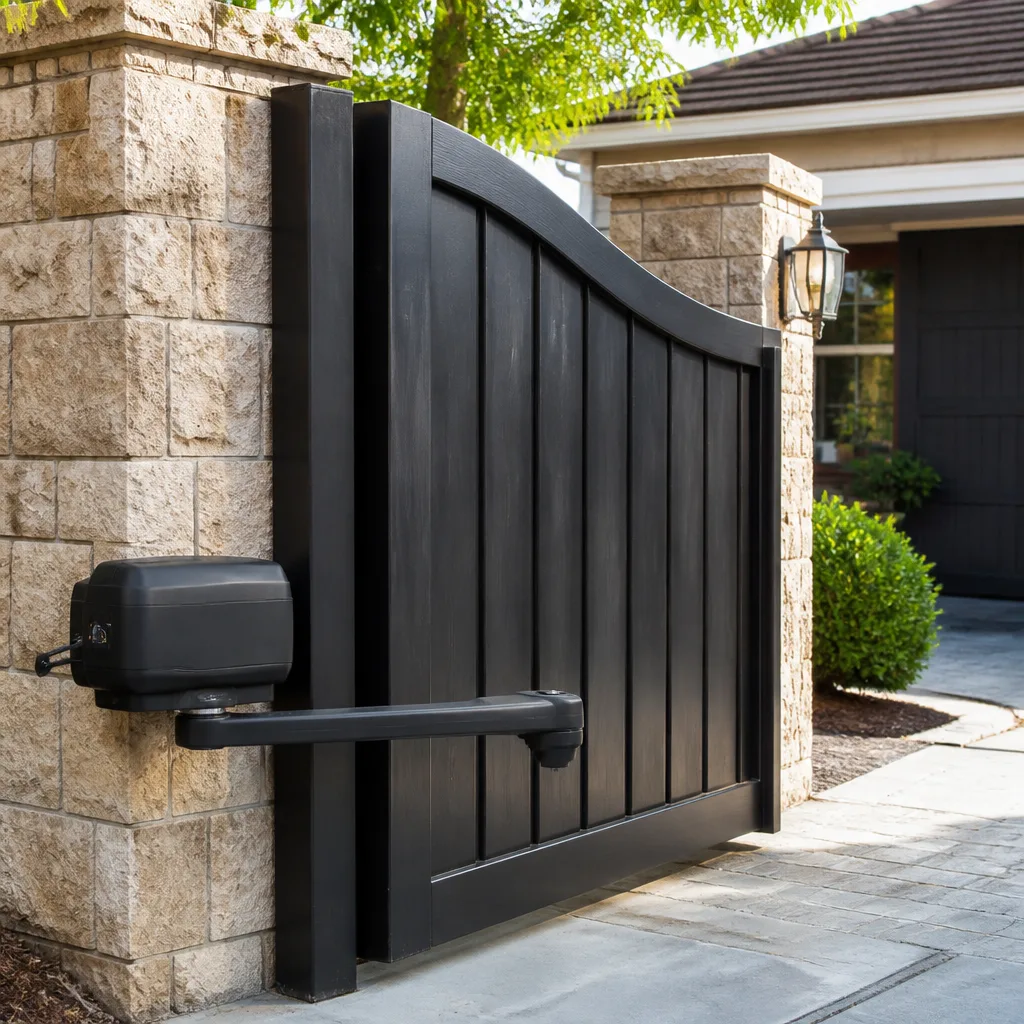
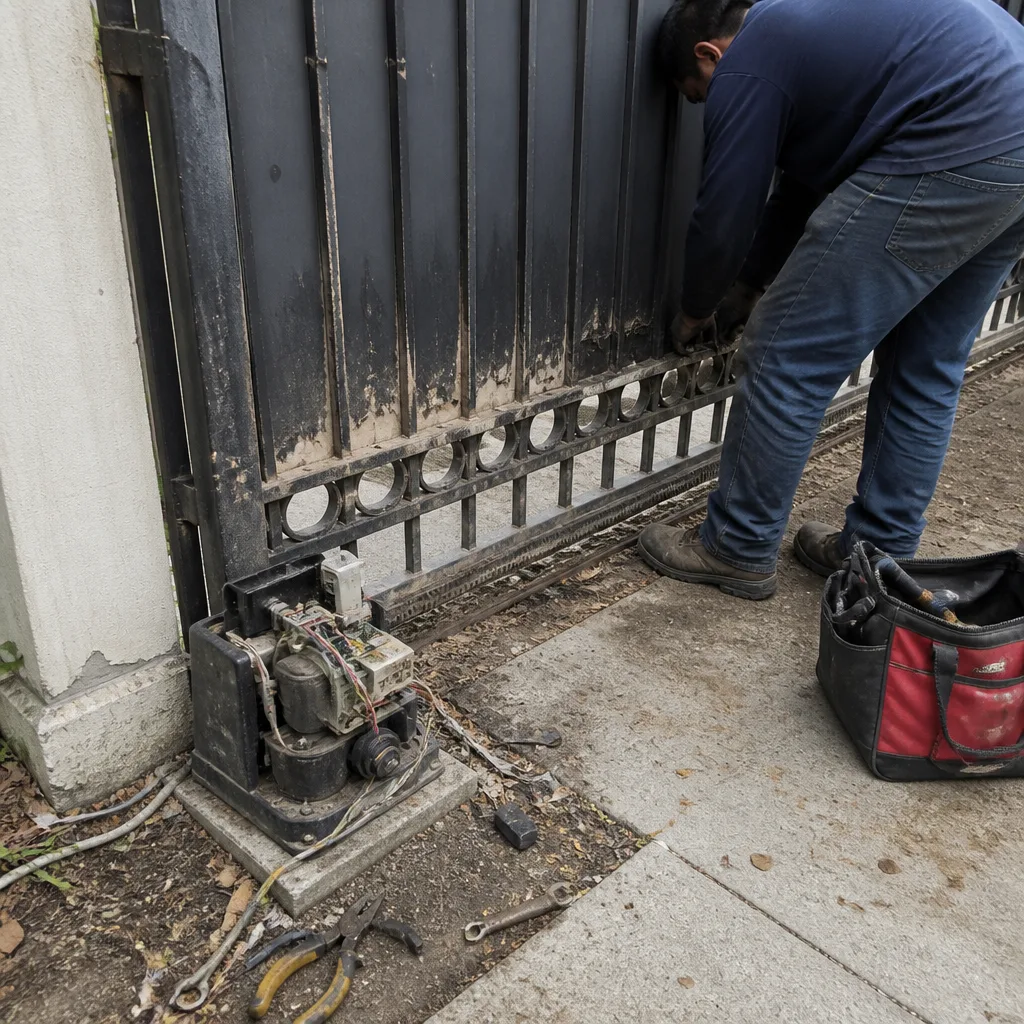 Before
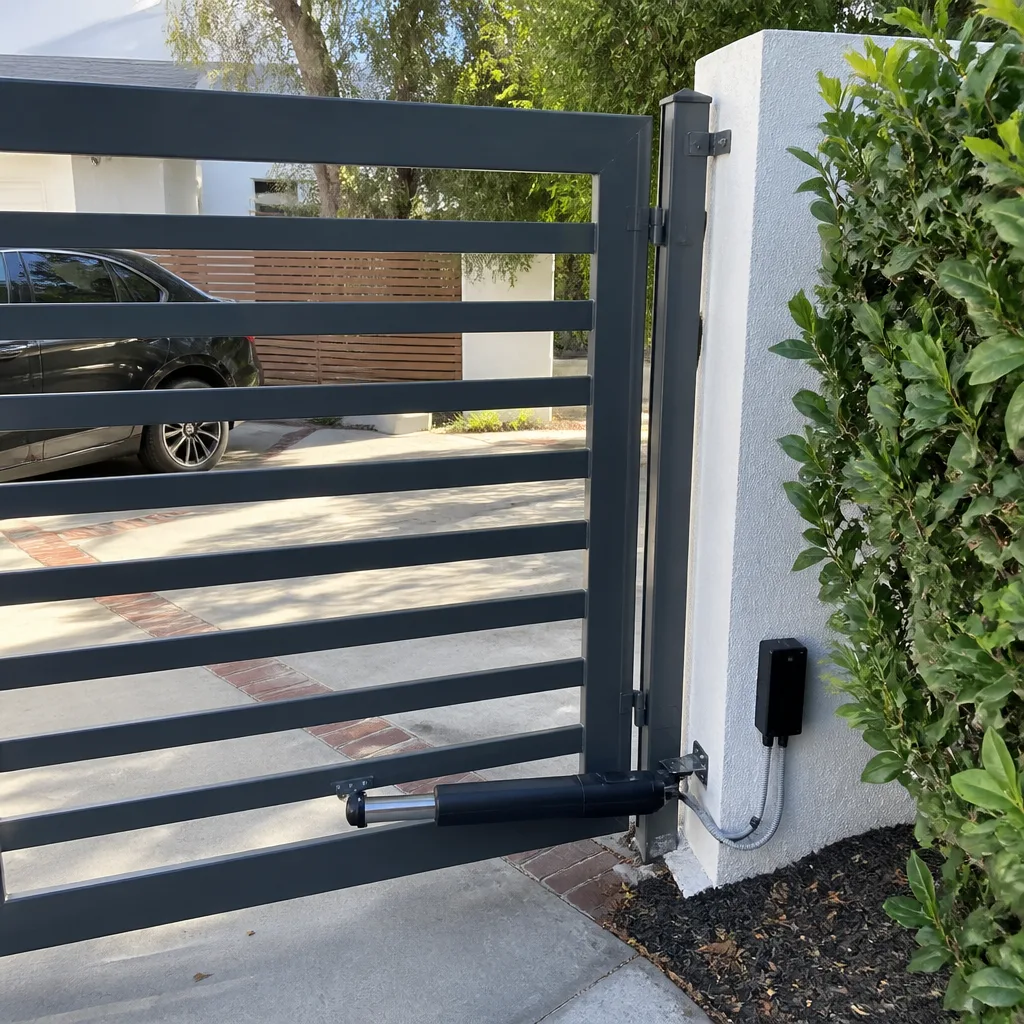 After
After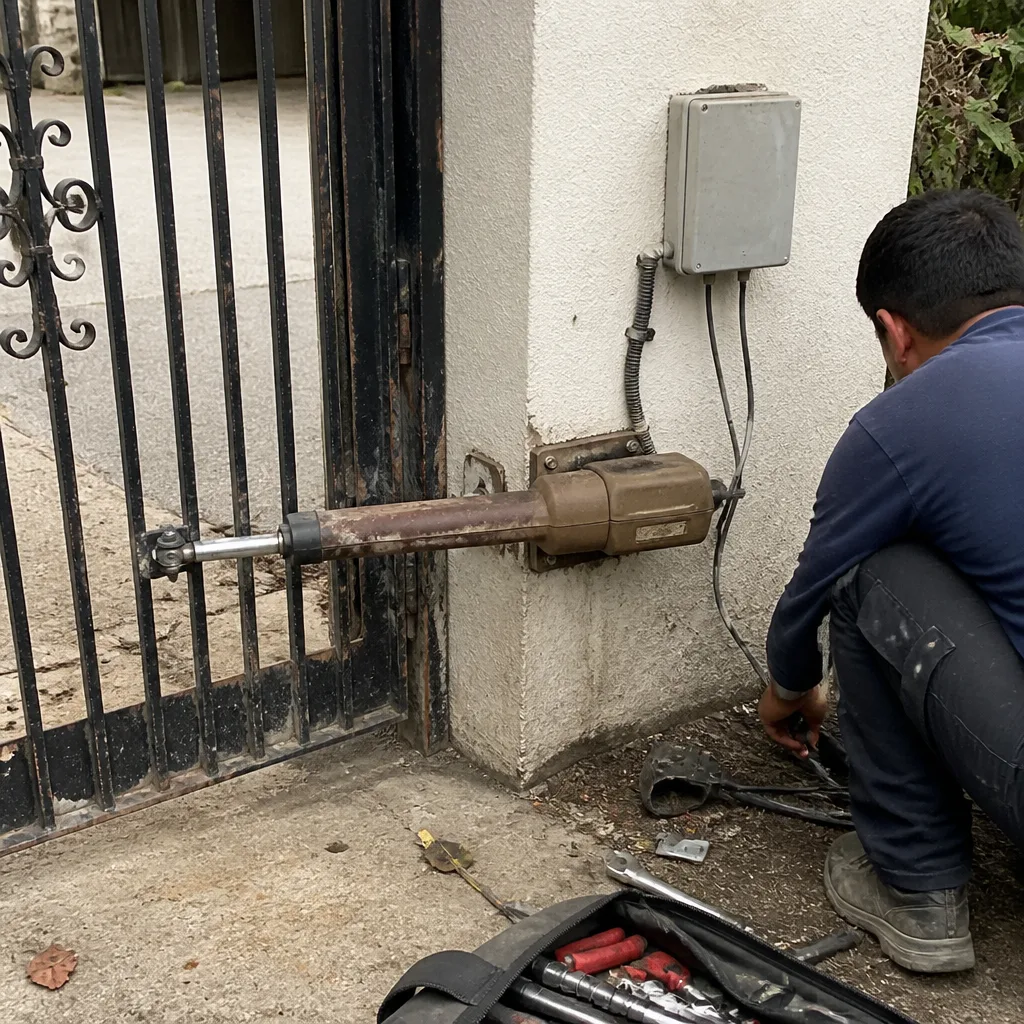 Before
 After
After Before
 After
AfterThe Complete Guide to Gate Repair in Culver City
Most gate failures in Culver City happen for reasons that have nothing to do with the gate itself. The real culprits are usually the clay soil shifting beneath the posts, the marine layer working on raw steel all year, or a motor that’s been asked to push a gate three times heavier than it was ever rated for. This guide covers what actually goes wrong, what it costs to fix in Culver City right now, and how to tell the difference between a $200 adjustment and a $2,000 replacement before you spend a dime. By the end, you’ll know exactly what to ask any contractor who shows up at your driveway.
Quick Answer
Gate repair in Culver City typically costs between $180 and $680 for most mechanical, electrical, and hinge-level fixes, with complete automation replacement running $1,200 to $4,800 depending on opener brand and gate weight. Most repairs take under two hours on site. The price you’re quoted should be settled before any work starts, and the labor should carry a written workmanship guarantee.
Table of Contents
- The Most Common Causes of Gate Failure in Culver City
- What Gate Repair Actually Costs in Culver City
- What You Can Safely Check Yourself vs. What Needs a Pro
- Understanding Your Gate Opener: Brand Realities in Culver City Driveways
- Welding and Structural Repair: When the Gate Needs More Than Parts
- Preventative Maintenance That Prevents the Big Bill
- Common Mistakes to Avoid
- When to Call a Professional
- Frequently Asked Questions
- The Bottom Line
Before we get into the weeds, a word on who we are: Ironworks Gate Co. home. We’ve been repairing, welding, and automating gates in Southern California for over 42 years, and we’ve seen just about every failure mode a gate can offer. That experience shapes what follows, but this guide is written to be useful whether you ever call us or not.
The Most Common Causes of Gate Failure in Culver City
Gates fail in predictable patterns, and Culver City’s geography and climate accelerate some of them. We saw more gate post settling last year in the Sunkist Park and Blanco-Culver Crest areas than anywhere else we service, almost entirely because of expansive clay soil. When that soil gets wet in winter and dries hard in summer, posts shift so gradually that nobody notices until the gate starts scraping concrete or the latch no longer lines up.
Here are the failures we encounter most often in Culver City driveways:
- Settled or shifted gate posts: The single most common structural problem. A post that has moved even three-eighths of an inch throws off the entire gate arc and puts stress on the hinges and opener.
- Worn or seized hinges: Heavy gates exert massive leverage on hinge pins over time. Once a hinge starts to bind, the opener motor has to work harder, which shortens its life significantly.
- Opener motor burnout: Many Culver City homes have gates installed in the 1990s or early 2000s. Those original motors are now 20 to 30 years old and at the end of their design life. A motor that hums but won’t move is usually this.
- Sensor and safety edge failures: A gate that reverses for no reason, or won’t close at all, is frequently a misaligned photo-eye or a worn safety edge strip. These are inexpensive parts, but they shut down the whole system when they fail.
- Corrosion from the marine layer: Properties closer to the 405 and the Baldwin Hills get more morning overcast than you might think. Wrought iron and steel gates that were never properly primed and powder-coated will develop rust at the weld joints and hinge plates first. We’ve repaired gates in Culver Crest where the metal at the bottom rail was paper-thin from decades of slow coastal moisture exposure.
- Control board damage from vibration or power surges: The electronics inside opener boxes don’t love the temperature swings Culver City gets between summer afternoons and cool nights. Condensation builds inside the housing, and top that with a voltage spike from an Edison line issue and the board is done.
One thing worth saying in plain English: gates are mechanical systems, and mechanical systems wear out. The good news is that the overwhelming majority of repair calls we get are for problems that can be fixed in a single visit.
What Gate Repair Actually Costs in Culver City
Our customers over 55 don’t want to call around for three bids. They want to know what a fair price should look like before they pick up the phone. So here is the straight answer, based on the Culver City market in 2025 and 2026.
Most minor gate repairs fall between $180 and $480. That bracket covers hinge adjustments, sensor realignments, safety edge replacements, keypad reprogramming, and limit switch adjustments. When you get into structural work, motor replacement, or control board failure, the number moves up accordingly.
Here is a realistic breakdown by job type in Culver City:
| Repair Type | Typical Cost Range | Time on Site |
|---|---|---|
| Hinge adjustment or replacement (single gate) | $220 – $450 | 1 – 2 hours |
| Sensor or safety edge replacement | $180 – $380 | 45 min – 1.5 hours |
| Keypad replacement or reprogramming | $180 – $320 | 30 min – 1 hour |
| Opener motor replacement (standard brands) | $750 – $1,800 | 2 – 4 hours |
| Full automation replacement (motor, arms, safety, keypad) | $1,800 – $4,800 | Half day to full day |
| Gate post reset or replacement | $600 – $1,600 | Half day |
| Welding repair (cracked hinge plate, broken picket) | $250 – $800 | 1 – 3 hours |
These numbers reflect what we charge and what the reputable shops in central LA County charge. The spread exists because a lightweight 12-foot driveway gate is a very different job from a 20-foot estate gate with a steel frame and a slide track. The weight determines everything: motor size, hinge specifications, and the time two technicians need to lift and reset the leaf.
One thing every Culver City homeowner should know before any gate repair: the price is quoted and agreed before any work starts. If a contractor will not put a number in writing before turning a single bolt, walk away. A square deal means no surprises on the bill. That’s how we run every job, and it’s how every honest shop should run theirs.
What You Can Safely Check Yourself vs. What Needs a Pro
This section matters. Some gate fixes are genuinely simple homeowner tasks. Others can put you in the emergency room. The dividing line is electricity and tension. If the job involves 120-volt wiring, an opener’s internal components, or any spring under load, stop and call someone who does this every day.
Here’s what you can safely check yourself, in order:
- Walk the gate path and look for obstacles. A fallen palm frond, a stack of pavers, or overgrown bougainvillea at the track can stop a gate cold and trigger the safety reverse. This accounts for a surprising number of “my gate won’t close” calls in Culver City.
- Inspect the track (for slide gates). Look for rocks, dirt buildup, or a bent section. Clean the track with a broom. If it’s bent, you need a welder, not a broom.
- Check the photo-eye sensors. They should face each other squarely, with no cobwebs blocking the lenses. Wipe them with a dry cloth. If the little red or green indicator lights aren’t lit, the sensor isn’t getting power or is misaligned.
- Look at the hinges visually. Are the hinge plates still flat against the post and gate? Is there rust flaking at the weld points? Is the gate sitting level, or does it sag noticeably toward the latch side?
- Listen to the opener. When you trigger it, does it hum but not move? That’s a motor or capacitor issue. Does it grind or click rapidly? That’s a gear or chain issue. Take note of the sound and describe it to whoever you call. It saves a diagnostic visit.
Here’s what you should not attempt yourself:
- Any electrical work inside the opener housing. Capacitors store charge even after power is cut. A shock from a charged capacitor can stop your heart. Do not open the control board cover.
- Any work on a gate under spring tension. Some older swing gates use heavy torsion springs that will take your hand off if they release. Do not unbolt anything spring-loaded.
- Removing or resetting a heavy gate leaf. A solid steel gate panel can weigh 400 pounds or more. It takes two or three people and the right equipment to handle it safely. A gate that falls on a person is a fatal accident. We treat every gate leaf as a crush hazard until it’s safely supported.
- Welding or structural repair. A cracked weld is not the same as a broken part. You need a certified welder with the right rod, the right heat settings, and the right eye protection. Culver City building codes also require that driveway gates with automatic openers meet specific entrapment safety standards, which means a structural repair that changes the gate’s geometry can affect code compliance.
If you’ve done the safe checks and the gate still won’t operate, the problem is almost always in the motor, the board, or a limit switch. That’s a call to a pro who’s seen your exact opener model before.
Understanding Your Gate Opener: Brand Realities in Culver City Driveways
We’re trained and equipped to service nine major gate-automation brands: LiftMaster, FAAC, BFT, Linear, Viking, Ghost Controls, DoorKing, Elite, and Mighty Mule. And in Culver City specifically, we see a lot of older DoorKing and Elite units on the larger estate properties up in the hills, and a lot of Ghost Controls and Mighty Mule on the more modest single-family driveways around Carlson Park and Vets Park.
Why does brand matter? Because the failure modes are different. An Elite slide gate operator from the early 2000s is a tank; the motor might outlast the control board by a decade. A Ghost Controls swing arm is a different animal entirely: it’s a residential-grade unit with a lower duty cycle, and it gets unhappy when someone runs the gate 40 times a day during a construction project.
Here’s the practical reality. If a technician shows up and says they’re not familiar with the brand on your gate, you’re paying for their education. The correct fix should be made on the first visit, not the third. That’s why we maintain parts inventory and diagnostic tools for all nine brands. A Mighty Mule keypad problem and a DoorKing limit switch problem have very different symptoms and very different fixes. Confusing them costs you money and leaves your gate limping.
If your opener is over 15 years old and the repair estimate is over half the cost of a new unit, replace it. The newer generations of these brands include better obstruction sensing, quieter motors, and battery backup options that matter in Culver City when a heat wave strains the grid and the power flickers. We’ll tell you honestly when repair is throwing good money after bad. Some shops won’t. We will.
Welding and Structural Repair: When the Gate Needs More Than Parts
This is where Ironworks Gate Co. is different from the average handyman with a truck and a multimeter. We’re a welding shop first. That’s our family trade, passed down through 42 years of gates in Southern California. When we look at a broken gate in Culver City, we see the metal before we see the motor.
A gate’s structural problems almost always start at the welds. The hinge plate is welded to the gate frame, and the frame is welded together at the corners. Over years of opening and closing, those welds flex microscopically every single cycle. Eventually, the metal fatigues and the weld cracks. You’ll see a hairline fracture running along the edge of a hinge plate. You might hear a creak that changes pitch. The gate might drop a half-inch at the latch end.
Structural repair is not a parts-swapping exercise. It’s a craft. Here’s how a proper structural fix goes:
- Assessment: The gate is supported and the cracked area is cleaned to bare metal. We look for cracks that extend beyond the visible surface into the frame tubing.
- Grinding and prep: The crack is ground out into a V-groove so the weld penetrates through the full thickness of the metal, not just across the top. A surface weld over a crack is a repair that fails again in under a year.
- Welding: We use the correct process for the metal, usually MIG for mild steel gates. The weld is laid in passes if needed, not in one fat bead.
- Reinforcement: If the original design was underbuilt for the gate’s weight, we’ll add a gusset plate or a secondary brace at the stress point. On a Culver City swing gate that’s been heaved out of alignment, sometimes the right fix is a larger hinge leaf, a longer post anchor, and a weld that distributes the load over more surface area.
- Finishing: The repaired area is primed and painted to match. If the gate needs full refinishing, that’s a separate conversation, and we’ll quote it separately so you know exactly where your money goes.
We can’t tell you how many times a customer has called us because a generalist contractor welded a crack shut, painted over it, and vanished. The gate failed again six months later. Done right, a structural gate repair in Culver City should outlast the rest of the gate.
Preventative Maintenance That Prevents the Big Bill
Most major gate failures give warning signs for months before they let go. The problem is that nobody is listening. In our experience, the homeowners whose gates last 25 years are the ones who either pay attention to small changes or have a regular maintenance visit on the calendar.
Here’s a sane maintenance rhythm for a Culver City driveway gate:
- Every season, walk the gate’s full path. Look at the hinges, the track, the weld points, and the opener chain or belt. If something looks different from last time, that’s information. Take a photo with your phone and compare.
- Every six months, clean the track and the photo-eyes. Dirt is the enemy of slide gates. A track that’s gritty at the edges wears the gate rollers and strains the motor. This takes 10 minutes with a broom and a dry rag.
- Once a year, have a technician do an $89 seasonal tune-up. We check limit switches, tighten all mounting hardware, grease the appropriate points (and not the inappropriate ones), test the entrapment reversal, and check for early weld cracking. The point of a tune-up is to catch the $200 problem before it becomes the $1,800 problem.
- After any major weather event or a nearby construction project, re-check the gate. Culver City is in a perpetual state of building and remodeling. Heavy trucks and excavators vibrate the ground for blocks in every direction. That vibration can shake fasteners loose and shift post footings.
We offer an $89 Seasonal Tune-Up year-round. It’s the cheapest insurance you can buy on a driveway gate, and it’s a fixed price, not a foot in the door. A 5% discount for seniors and veterans applies to every service we do, always. We’ve been serving Culver City homeowners since 2013, and the customers we see most often for tune-ups are the ones we almost never see for emergency repairs. That’s not a coincidence.
Common Mistakes to Avoid
- Ignoring a gate that’s getting slower and slower. A motor that’s straining against a bent track or a failing capacitor will get slower before it stops. If your gate takes noticeably longer to open or close than it did a year ago, something is wearing out. A slow gate is a loud signal, not a quirk.
- Calling a general handyman for a gate opener problem. Gate automation is a specialty. A handyman who fixes toilets and hangs drywall is not the person to diagnose a DoorKing control board fault or a Ghost Controls actuator issue. You will pay for his learning curve, and the fix may not be right.
- Waiting until the gate won’t open at all before calling. A gate stuck open is a security and safety problem in Culver City; a gate stuck closed traps your car. The repair will cost the same whether you catch it early or late, but the stress of a total failure on a Monday morning is avoidable. Call when the gate starts acting strange.
- Accepting a verbal estimate without a written number. A contractor who quotes a price over the phone and then changes it once the gate is disassembled has you over a barrel. The price should be quoted and agreed before any work starts. In writing. Every time. No exceptions.
- Lubricating the gate with WD-40. WD-40 is a water displacer, not a lubricant for gate hinges and rollers. It washes out the good grease and leaves the joint dry. Use a proper lithium grease or a dry graphite lubricant depending on the joint, or let a technician do it during a tune-up.
- Replacing a perfectly good gate because a contractor says it’s beyond saving. Some companies push replacement because the profit margin is higher. A welded repair on a steel gate costs a fraction of a new gate and can add another decade of service. If a contractor tells you the gate is dead, get a second opinion. We offer a Free Second Opinion on Any Written Estimate, and we’ll tell you honestly if the gate can be saved. Often it can.
- Forgetting that the gate posts are buried in soil, not bolted to the house. Culver City’s clay soil moves. If you see a gate that’s started scraping or sagging, it’s almost never the gate’s fault. The post has shifted. Fix the post, and the gate corrects itself. Rehang the gate on a bad post and you’ll do it again in a year.
When to Call a Professional
You should call a gate professional when the problem involves electricity, tension, weight, or a weld. If your gate sparks, trips a breaker, or the opener housing is buzzing without moving the gate, that’s an electrical issue and a real fire risk. If the gate has come loose from a hinge or is visibly sagging, that’s a structural hazard. If a weld is cracked or a post is leaning, that’s a crush hazard. Do not run the gate, and keep children and pets away until a technician has made it safe.
You should also call a pro if you’ve done the basic checks and the gate still misbehaves. Intermittent failures are the hardest to diagnose, and a technician who has seen your exact brand and model 200 times will find the cause in minutes. Ironworks Gate Co. offers free estimates in Culver City. Call (619) 350-4659 and a live person will answer, day or night. We’ll get a technician out, diagnose the problem, and quote you a fixed price before any work begins.
Frequently Asked Questions
Most gate repairs in Culver City run between $180 and $680 for common mechanical and electrical fixes, with full automation replacement costing $1,200 to $4,800 depending on the opener brand and gate weight. The exact number depends on what failed, how heavy the gate is, and whether structural welding is required. Call (619) 350-4659 for a free estimate and we’ll give you a written price before any work starts.
In most cases, yes. We keep our trucks stocked with common parts for LiftMaster, FAAC, BFT, Linear, Viking, Ghost Controls, DoorKing, Elite, and Mighty Mule, which means the fix is often made on the first visit. A live person answers our phone 24 hours a day, 7 days a week, so you’ll know exactly when a technician can be at your Culver City home. We’ll be there when we say.
In Culver City, a sagging gate is usually the post, not the hinges. The expansive clay soil shifts with rainfall and drought cycles, and the post moves with it. Once the post is out of plumb, the gate drops at the latch end and scrapes. The fix is to reset or replace the post and rehang the gate, which runs $600 to $1,600 depending on the gate’s size and the footing conditions. Call (619) 350-4659 and we’ll tell you what’s actually moving before quoting a fix.
We’re trained and equipped on nine major brands: LiftMaster, FAAC, BFT, Linear, Viking, Ghost Controls, DoorKing, Elite, and Mighty Mule. That covers virtually every residential and light-commercial gate opener found on Culver City driveways. If your opener is one of these, we have the diagnostic tools and parts to fix it right on the first visit.
A quality gate opener in Culver City should last 12 to 18 years with proper maintenance, though coastal moisture from the marine layer can shorten the life of electronics and internal gearing if the housing isn’t well sealed. We’ve seen well-maintained DoorKing and Elite units in Culver City that are over 25 years old and still running. The $89 Seasonal Tune-Up catches small problems before they shorten the motor’s life. Call (619) 350-4659 to schedule one.
Every job we complete is protected by our 90-Day Done Right Promise, in writing. If something isn’t right, we come back and make it right. No paperwork, no arguing, no exceptions. That promise applies to every gate repair, installation, and automation job we do in Culver City. We also offer $50 Off Any Repair Over $250 and a Free Second Opinion on Any Written Estimate.
The Bottom Line
A gate is a mechanical system, and mechanical systems wear out. But the expensive failures almost never happen without warning, and the warning signs are visible if you know what to look for: a slowing motor, a sagging leaf, a hairline crack at a weld, a post that’s drifted a quarter-inch out of plumb. Catch those early and a Culver City gate repair is a few hundred dollars. Ignore them and it’s a few thousand. Do the free checks yourself, keep the track and sensors clean, get a yearly tune-up, and call a specialist the moment something changes. If you’re in Culver City and want a second set of eyes, call (619) 350-4659. We’ll give you an honest assessment and a written price before a single bolt is turned.
Written by Victor Salinas, Owner at Ironworks Gate Co., serving Culver City since 2013.