
Last updated August 25, 2026
Free on-site gate assessment - hinges, posts, and your LiftMaster or Nice gate operator checked before anything is quoted
The assessment is free and the quote is the invoice.

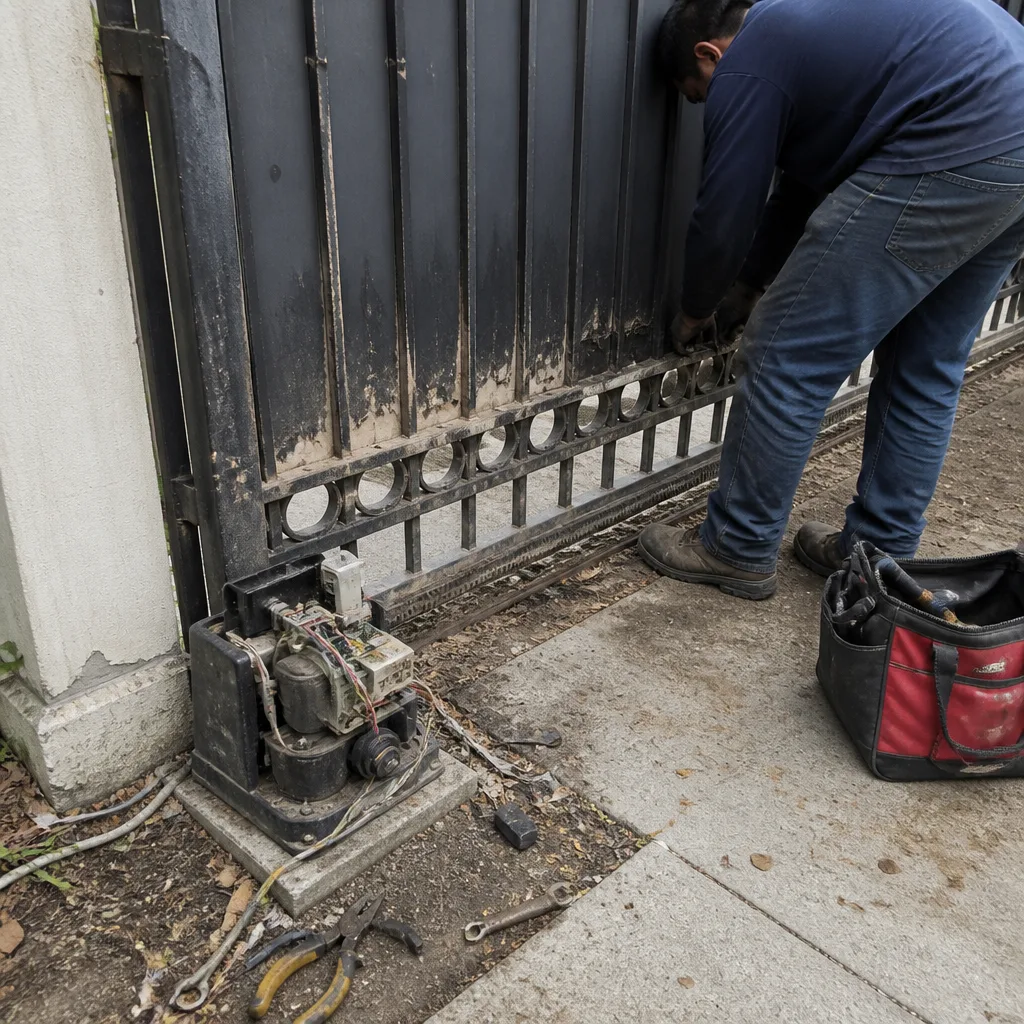 Before
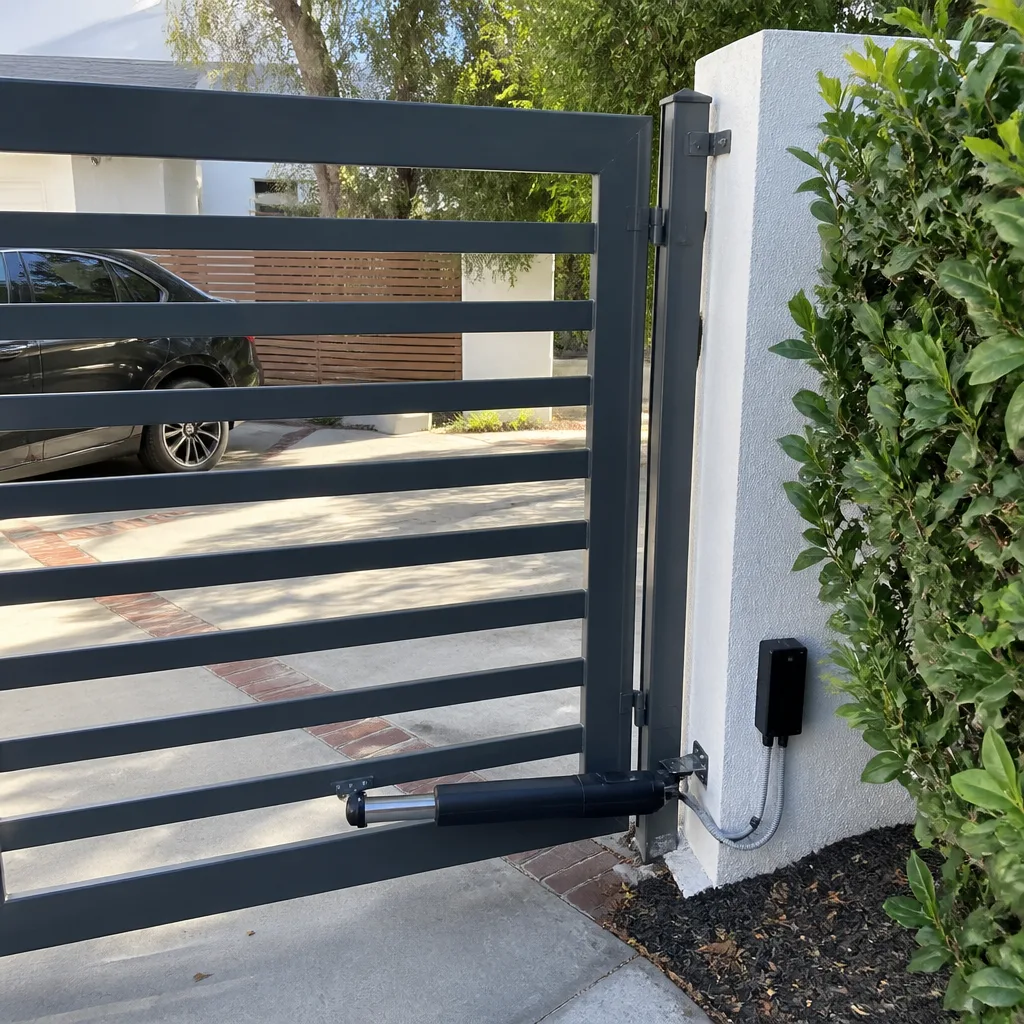 After
After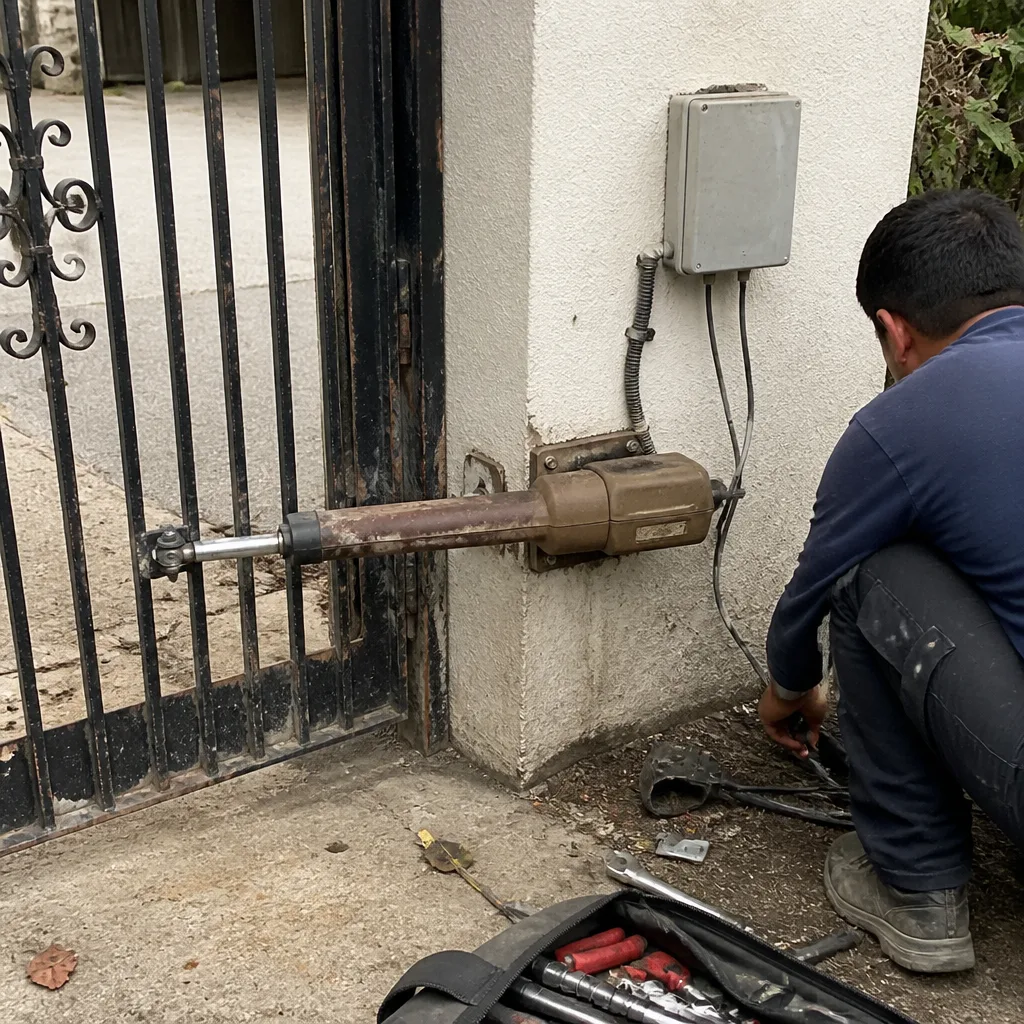 Before
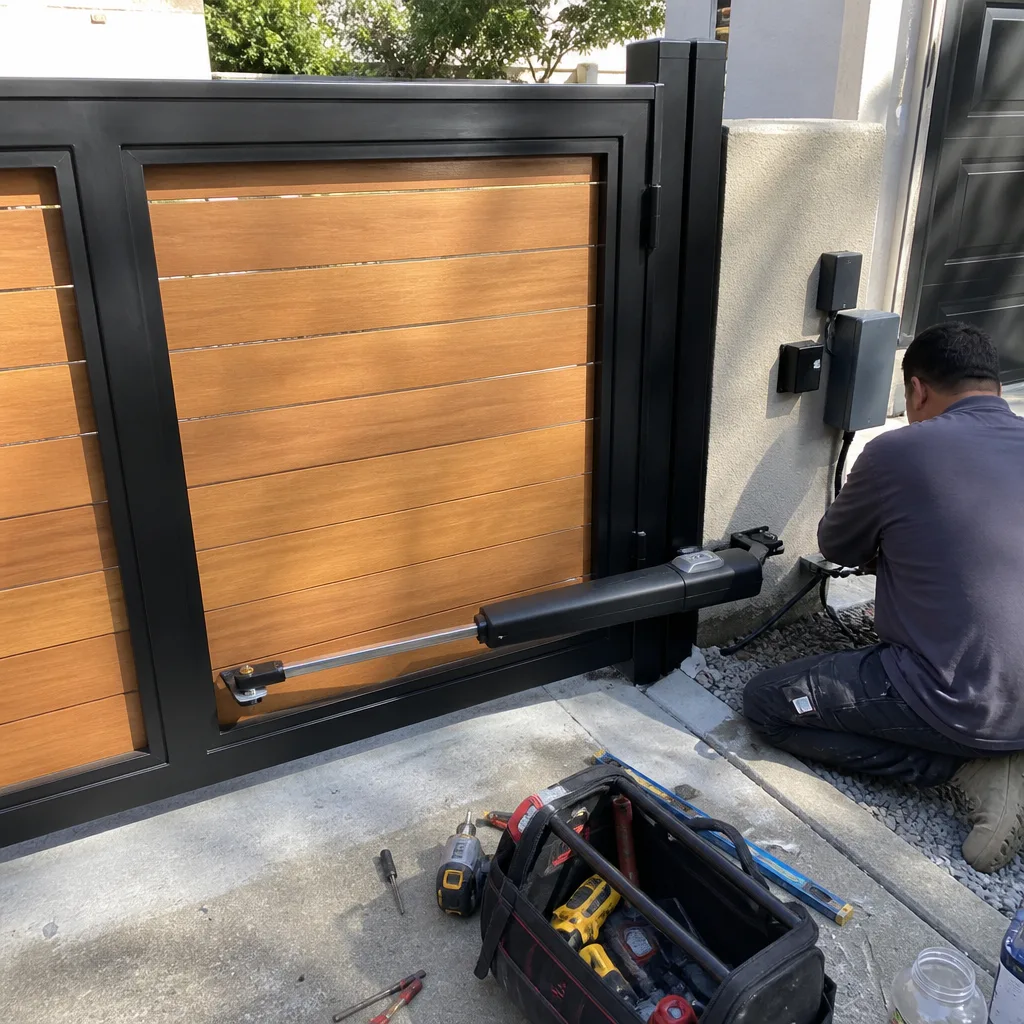 After
After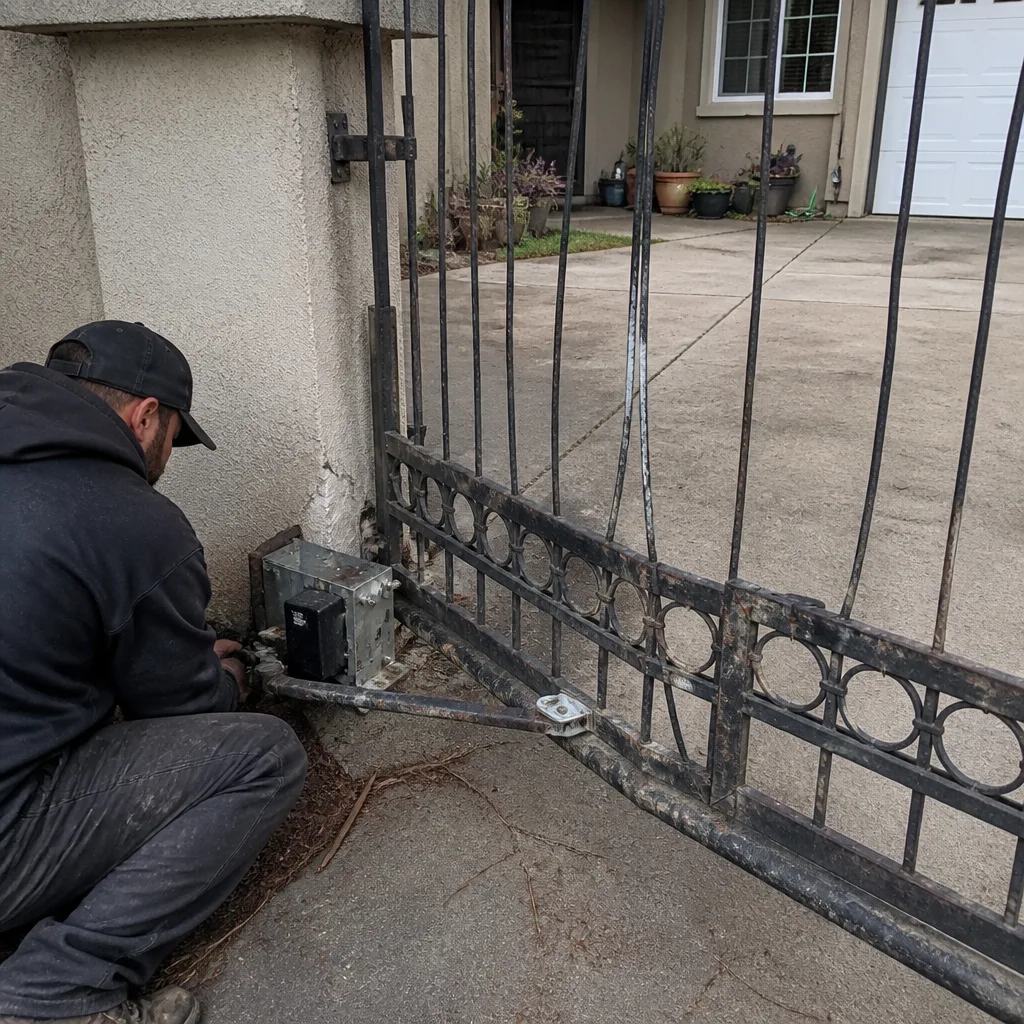 Before
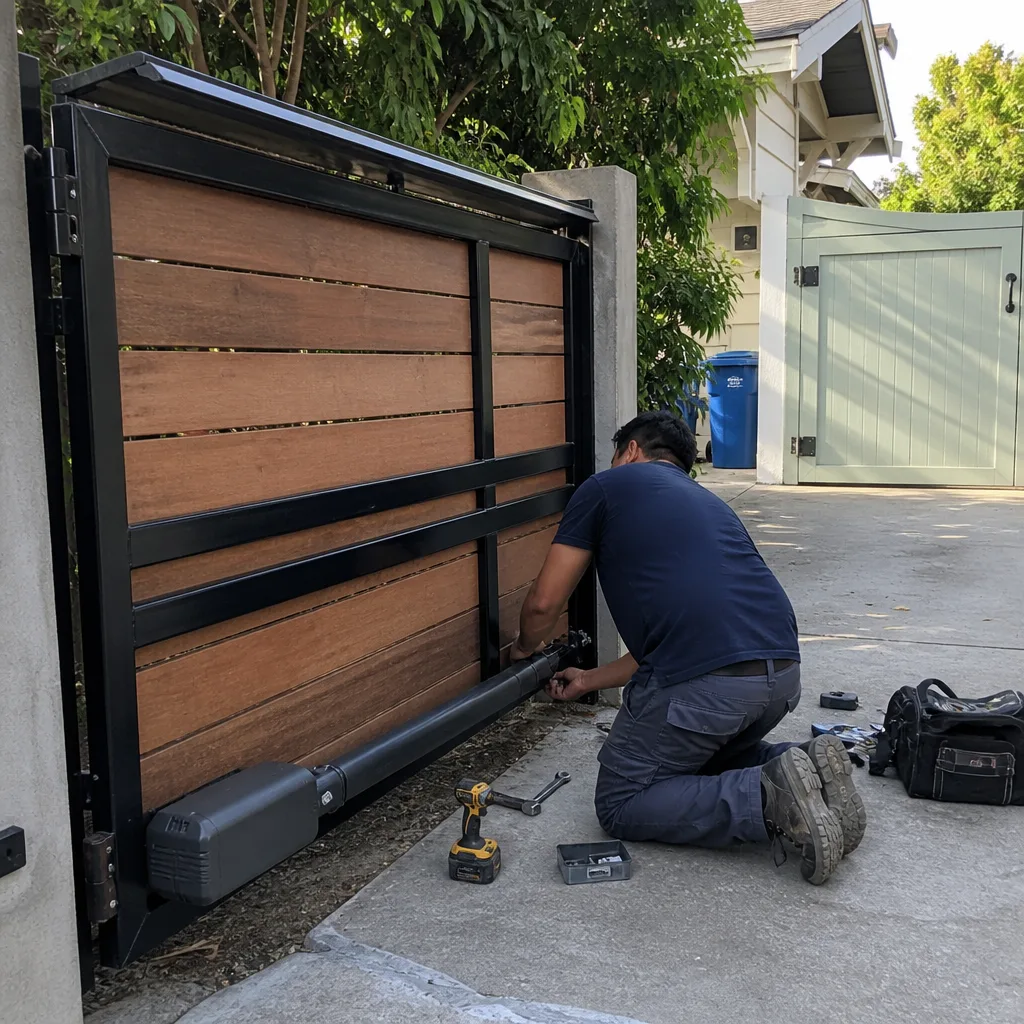 After
AfterHow to Hire a Gate Repair Contractor in Culver City: A Step-by-Step Guide
Here’s a number that surprises most Culver City homeowners: roughly seven out of ten automatic gate failures we’re called to fix were made worse by the previous repair attempt. A handyman who swapped a gear but didn’t check the limit switch. A well-meaning neighbor who greased a chain that was designed to run dry. The gate still doesn’t work, but now the repair costs more because someone has to undo the damage first. This guide walks you through how to hire the right gate contractor the first time, so you pay once and the gate stays fixed. You’ll learn what to ask before anyone touches your gate, what a fair price looks like, how to spot a contractor who actually knows gate automation, and how to protect yourself with a written guarantee.
Quick Answer
Hiring a gate repair contractor in Culver City comes down to five steps: verify the contractor specializes in gates (not general handyman work), confirm they service your specific opener brand, get a written quote with the price settled before work begins, ask about their warranty in writing, and check that a real person answers the phone when you call. A qualified gate specialist should be able to diagnose most gate problems in one visit and back the repair with a written guarantee, not a verbal promise.
Table of Contents
- Know the Signs: What Your Gate Is Telling You
- Why Gate Specialists Are Different From General Handymen
- The Five Questions to Ask Before Hiring Anyone
- What Gate Repair Actually Costs in Culver City
- Why the Opener Brand on Your Driveway Matters
- How to Verify a Contractor’s Warranty Before You Sign
- What a Proper Gate Repair Visit Should Look Like
- Culver City Considerations: Climate, Codes, and Neighborhoods
Know the Signs: What Your Gate Is Telling You
Before you start calling contractors, it helps to know what you’re actually looking at. A gate that groans, shudders, or stops halfway is sending you a specific message, and the message usually points to one of three systems: the mechanical hardware, the motor, or the control board.
Mechanical problems are the most common in Culver City, and they’re also the easiest to spot. Listen for grinding when the gate moves. That sound almost always means a hinge is worn or a roller has gone flat. Look at the gate from the side while it opens. If it sags toward the latch side, you’re seeing hinge wear, and ignoring it will eventually bend the frame. A gate that’s hard to push manually is working against its own hardware.
Motor problems sound different. A humming motor that doesn’t move the gate often means the capacitor has failed or the gear train is stripped. A gate that opens but won’t close, or closes but won’t open, points to a limit switch that’s out of adjustment. And a gate that reverses direction mid-travel is usually fighting a safety sensor issue, which is a genuine safety concern, not just an annoyance.
Control board problems are the hardest to diagnose without training. If the gate works from the wall button but not the remote, that’s a receiver issue. If it works from one remote but not another, the board may have lost its programming. If it opens randomly at 3 a.m., the board is receiving stray signals or the photo eyes are misaligned. In our experience, most Culver City gate failures are diagnoseable in under an hour by someone who works on gates every day, but the same problem can stump a generalist for an afternoon.
Quick takeaway: Write down exactly what the gate does and when it does it before you call. “Gate won’t close after 5 p.m.” is more useful to a technician than “gate is broken.”
Why Gate Specialists Are Different From General Handymen
A gate is two trades welded together. The gate itself is steel, hinges, and welding. The opener is electronics, motors, and control boards. Most general handymen are comfortable with one of those trades, not both. When a handyman fixes a gate hinge but doesn’t check the opener’s torque settings, the gate works for two weeks and then the new hinge fails because the motor is still fighting the gate’s weight. When an electrician replaces a control board but doesn’t check the gate’s balance, the board burns out in six months because the motor is overloading.
That’s why Culver City homeowners who have lived in their homes for twenty years or more tend to hire gate specialists. They’ve already been through the cycle of calling a generalist, paying for a fix, and watching it fail. A gate specialist treats the gate and the opener as one system. At Ironworks Gate Co. home, that’s the only kind of work we take: gates, from the hinges and welds to the keypads and automation.
Here’s what a specialist does differently:
- Diagnoses before repairing. A specialist checks the gate’s balance, the hinge alignment, the motor’s amperage draw, and the board’s error codes before turning a single bolt. The diagnosis comes first, and the repair follows from it.
- Carries the right parts. Gate openers from DoorKing, Elite, and Ghost Controls share almost no parts with each other. A specialist shows up with the right gear, limit switches, and control boards for your brand, which is why most jobs finish in one visit.
- Knows the safety requirements. Automatic gates in California must meet specific safety standards for entrapment protection. A specialist knows what the photo eyes, safety edges, and reversing mechanisms are supposed to do, and will not bypass them to make a gate “work.”
- Stands behind the work. A generalist who fixes a gate is onto the next job. A specialist’s entire reputation rides on whether your gate still works a month later.
If you’re deciding between two quotes and one comes from a gate-only contractor while the other comes from a handyman who also does drywall, the choice is usually the gate contractor. The gate contractor’s business depends on the gate working long after the check clears.
The Five Questions to Ask Before Hiring Anyone
Most homeowners don’t know what to ask a gate contractor, so they ask about price and availability and hope for the best. Here are the five questions that actually separate a qualified gate contractor from a gamble, along with the answers you want to hear.
Question 1: “Do you work on my opener brand?”
If the contractor hesitates or says “all of them are basically the same,” that’s a warning sign. They’re not. The control board logic in a LiftMaster opener is completely different from a BFT opener, and the diagnostics are different too. A contractor who is certified on your specific brand will fix it faster and correctly. At minimum, ask this question and listen for a direct answer, not a dodge.
Question 2: “Is the price settled before you start?”
You want a yes. Not “we’ll see what we find” or “it depends.” A contractor who has properly diagnosed the problem over the phone or on arrival should be able to give you a firm price before work begins. If there’s a genuine unknown (like a buried wire that might be the culprit), a good contractor will explain the contingency and get your approval before spending your money. No surprises on the bill, ever.
Question 3: “What’s your warranty, and is it in writing?”
Every contractor says they’ll stand behind their work. Very few put it in writing. Ask specifically: “If this fix fails in 60 days, what happens?” The answer you want is simple: they come back, they fix it, you don’t pay again, and you don’t have to argue about it. If the contractor gets vague here, that’s the answer.
Question 4: “Who is actually coming to my house?”
Some companies sell the job and then subcontract it to a one-truck operator you’ve never heard of. Ask whether the technician who shows up is an employee of the company you’re hiring, whether they’re background-checked, and whether they’ll be in uniform. You’re letting this person onto your property and around your family. You have a right to know who they are.
Question 5: “If my gate can’t be repaired, what are my options?”
Good contractors will tell you straight: sometimes a 25-year-old gate with a rusted-through frame is better off replaced than repaired. You want a contractor who’ll give you an honest recommendation, not one who’ll patch a dying gate just to invoice you. Ask this question and watch how they answer. If they immediately push a full replacement without explaining why, get a second opinion.
What Gate Repair Actually Costs in Culver City
Gate repair pricing in Culver City is more transparent than most people expect, once you know what drives it. The biggest variable is whether the problem is mechanical or electronic. Mechanical repairs (hinges, rollers, welding) cost less in parts but more in labor. Electronic repairs (control boards, motors, sensors) cost more in parts but less in labor. Here’s what we see in the Culver City market:
- Gate hinge replacement: $180-$400 per hinge, depending on the gate’s weight and whether the hinge is bolted or welded. Most residential gates have two to four hinges.
- Gate opener motor replacement: $450-$900, including the part and labor. The range depends on the brand and horsepower.
- Control board replacement: $350-$750. Boards for DoorKing and Elite openers tend to sit at the higher end because of their programming complexity.
- Photo eye or safety sensor replacement: $150-$300. This is a safety component, not a convenience feature, so it needs to be done correctly.
- Gate track or roller repair: $250-$600 for slide gates, depending on how many rollers are flat-spotted.
- Full gate tune-up: $89-$250, including hinge lubrication, motor adjustment, sensor alignment, and a full system test.
These numbers reflect what Culver City homeowners can expect to pay from a licensed, insured gate specialist. Handymen sometimes quote lower, but the lower quote often excludes the diagnostic work or uses aftermarket parts that wear out faster. The more useful question isn’t “what’s the cheapest price” but “what price fixes it the first time.”
One thing a good contractor will always do: settle the price before work starts. Not after the gate is disassembled and you’re over a barrel. The price you approve is the price you pay. Ironworks Gate Co. has always worked that way, and we believe it’s the only fair way to do business.
Why the Opener Brand on Your Driveway Matters
Walk down any street in Culver City’s residential neighborhoods and you’ll see gates powered by a half-dozen different opener brands. Mighty Mule openers are common on lighter gates because they’re affordable and DIY-friendly. DoorKing and Elite openers are the workhorses on heavier estate gates and longer driveways. Ghost Controls has gained ground in recent years on mid-weight gates. Each brand has its own failure patterns, its own parts, and its own programming quirks.
Here’s why that matters to you as a homeowner: a technician who mostly works on Mighty Mule openers may fumble through a DoorKing diagnosis. The control board diagnostics are different. The limit switch adjustments are different. The remote programming sequence is different. A contractor who’s genuinely trained on your brand will show up knowing where the common failure points are and what parts to bring.
When you call a contractor, ask directly: “Have you been trained on my opener brand?” A good answer sounds like this: “Yes, we service DoorKing, Elite, and Mighty Mule openers regularly, and our technicians are trained on all three.” A bad answer sounds like this: “They’re all pretty much the same, we’ll figure it out.” The first answer means one visit, fixed right. The second answer means guesswork on your dime.
If you don’t know what brand is on your gate, look at the opener unit itself. The manufacturer’s name is printed on the cover or on a label inside. Write it down before you call. It’ll save everyone time.
How to Verify a Contractor’s Warranty Before You Sign
Everyone says they guarantee their work. Few will put it in writing without being asked, and fewer still will honor it without an argument. Here’s how to tell the difference before you hand over a deposit.
Ask for the warranty in writing. Not a verbal “we’ll take care of you,” but an actual line item on the invoice or estimate. “All labor and parts guaranteed for X days.” If the contractor won’t put it on paper, the guarantee doesn’t exist.
Ask what the warranty covers. A real warranty covers both parts and labor. A parts-only warranty means you pay for the labor if the new part fails, which can cost more than the part itself. Read the language.
Ask what happens if the same problem comes back. This is the test. If a hinge gets replaced and fails again in 45 days, does the contractor come back and fix it at no charge, or do they blame “normal wear” and invoice you again? The answer reveals more about the company than any marketing language.
Check the warranty period against the typical failure timeline. A 30-day warranty is essentially worthless for gate work. If a repair fails, it often fails in the first month or two as the gate cycles through weather and temperature changes. You want at least 60 to 90 days of coverage. Ironworks Gate Co. puts a 90-Day Done Right Promise on every job we complete, in writing, with no paperwork and no arguing. If it’s not right, we come back and make it right. That’s the standard we’ve held ourselves to for over 42 years, and it’s the standard you should expect from any contractor you hire.
Finally, ask how warranty claims work. Do you call the company? Does a live person answer? If the company routes warranty calls to voicemail and returns them three days later, the warranty is theoretical. You want a company that answers the phone when you call, every time, 24 hours a day. The warranty is only as good as the company’s willingness to pick up the phone.
What a Proper Gate Repair Visit Should Look Like
You’ve hired the contractor. The truck pulls up. Here’s what a professional gate repair visit should look like from start to finish, so you can recognize whether you’re getting the service you paid for.
- The technician introduces themselves and asks about the symptoms. Not “what’s broken” but “what’s it doing, and when did it start.” A good technician wants your observations because you live with the gate and they don’t.
- The diagnosis comes before the repair. The technician should inspect the gate’s balance, hinges, rollers, motor, sensors, and control board. They should explain what they found in plain language, not trade jargon. If they can’t explain it simply, they may not understand it deeply.
- The price is settled before work starts. You approve a number, and that’s the number on the invoice. No “while I was in there I noticed” add-ons without your explicit approval.
- The repair is done with the right parts for your brand. Not whatever’s on the truck that might fit. The correct gear, the correct board, the correct sensor.
- The gate is tested through multiple full cycles. Open and close, open and close. The technician should watch the gate run and listen for anything off. This is where a rushed job shows itself: a technician who tests the gate once and leaves is a technician who may be back.
- You’re shown the gate working and told what was done. A proper repair ends with a walkthrough. Here’s what was wrong. Here’s what we replaced. Here’s how to test it yourself.
- The warranty is in writing on your invoice. Not a handshake. A written guarantee with a clear expiration date and a clear remedy.
If any of these steps are skipped, you’re settling for less than a professional standard. The good news is that in Culver City, you have choices. The fewer shortcuts a contractor takes, the longer the gate will run.
Culver City Considerations: Climate, Codes, and Neighborhoods
Culver City has its own particular set of gate challenges, and a contractor who’s worked here for years knows them by heart. Here’s what makes gate work in Culver City different from, say, the Valley or the beach cities.
The Marine Layer Does Real Damage
Culver City sits close enough to the coast that morning marine layer rolls through most of the year. That moisture settles on metal gates and does two things: it accelerates rust on untreated steel, and it corrodes electrical connections over time. We see more rusted hinge bolts and more corroded terminal connections in Culver City than in the drier inland neighborhoods. A gate that’s been rusting quietly for years will eventually seize a hinge or short a sensor, and the homeowner will assume the opener died. A good Culver City gate contractor checks for corrosion first, because it’s the most common underlying cause.
Older Homes, Older Gates
Many Culver City homes were built between the 1940s and 1970s, and plenty of their gates date from the same era. We regularly work on gates that have been swinging for 40 or 50 years. Those gates are often better built than anything on the market today, but their hardware is tired. The frames may be solid steel worth keeping, even if the hinges, rollers, and openers are worn out. A contractor who knows Culver City understands that a restoration is often better than a replacement, and will tell you honestly which one makes sense. We’ve rebuilt gates in Culver City that will outlast the houses they guard.
Property Lines and Easements
Some Culver City neighborhoods have gates that sit close to property lines, sidewalks, or shared driveways. Before any major gate work, it’s worth confirming where your property line actually is and whether the gate swings over a public sidewalk or city easement. A gate that swings out over a sidewalk in Culver City can create liability issues if a pedestrian is in the path. Good contractors check clearance and swing direction before installing or modifying a gate, and they’ll flag it if your gate swings into space it shouldn’t.
Permitting and Setbacks
Most gate repairs don’t need a permit in Culver City. Replacing a hinge, swapping a control board, or installing a new opener is routine maintenance. However, installing a fully new gate system or automating a previously manual gate may trigger city review, especially if the gate exceeds height limits or sits in a required front-yard setback. The city wants to know that an automated gate won’t trap anyone and will not obstruct access for emergency vehicles. A contractor familiar with Culver City’s requirements will tell you when a permit is needed and will handle the paperwork. If a contractor dismisses permit questions entirely, get a second opinion.
Neighborhood Context
The gate work we see in Culver City varies by neighborhood. In the single-family streets near Veterans Park and El Marino Park, we see a lot of slide gates on compact driveways where swing gates would obstruct the sidewalk. In the larger estate properties near Culver Crest and up toward Baldwin Hills, we see heavier ornamental gates with more complex automation. Each setting has different needs: a slide gate on a tight driveway needs different hardware than a wide swing gate on a long private drive. Hiring a contractor who understands your neighborhood’s typical gate setups means fewer surprises when the work begins.
Common Mistakes to Avoid
- Hiring a generalist to save money. The handyman who fixes your fence and your garbage disposal is not the right person to diagnose a Gate opener control board. You’ll pay for the discount when the gate fails again in six weeks.
- Skipping the written estimate. Verbal quotes evaporate. Always get the price on paper before work starts, and make sure the quote says it’s the final price.
- Ignoring the safety sensors. Photo eyes and safety edges exist to keep a gate from closing on a person, a pet, or a car. A gate that’s working “fine” but has bypassed sensors is a liability, not a fix. Any contractor who suggests bypassing safety equipment should be shown the door immediately.
- Choosing parts over the contractor. A cheap aftermarket control board installed by a skilled technician can work for years. A premium board installed by someone who doesn’t understand it can fail in a month. The contractor’s skill matters more than the part’s brand name.
- Not asking about the warranty until after the job. The time to ask about a warranty is before you sign anything. Once the gate is fixed and the check is written, you’ve lost your leverage.
- Letting the gate run until it dies. A gate that groans, shudders, or hesitates is telling you something is wrong. Every month of neglect turns a $200 hinge replacement into an $800 motor replacement. The cheapest gate repair is the one done early.
- Hiring based on the first Google result without checking. The top search result paid to be there. Take ten minutes to check reviews, ask about the warranty, and talk to a human on the phone. A real gate contractor will be glad to answer your questions.
When to Call a Professional
Some gate problems are safe to observe, but few are safe to fix yourself. If your gate has high-tension springs under load, do not attempt to remove or adjust them. A spring under tension stores enough energy to cause serious injury if it releases unexpectedly. The same goes for heavy gates off their tracks: a 400-pound gate that slips can crush whatever’s beneath it. If your gate is making grinding noises, reversing unexpectedly, or failing to stop when the safety sensors are triggered, call a professional. These are not adjustments you can safely make with a wrench from the hardware store. Ironworks Gate Co. offers free estimates in Culver City. Call (619) 350-4659 and a live person will answer, 24 hours a day, 7 days a week.
Frequently Asked Questions
Gate repair in Culver City typically costs between $180 and $900 depending on the problem. Hinge replacements start around $180, control board replacements run $350 to $750, and full opener motor replacements range from $450 to $900. The final price depends on your opener brand and the gate’s condition, but a reputable contractor will settle the price before work starts. Call (619) 350-4659 for a free estimate.
Yes, and for safety issues a same-day visit is common. If your gate won’t close and your property is unsecured, a gate contractor in Culver City should treat that as urgent. Ironworks Gate Co. answers calls 24/7 and schedules emergency repairs for the same day whenever possible. Call (619) 350-4659 and a live person will answer, not an answering service.
Most gate repairs don’t require a permit in Culver City. Replacing hinges, openers, sensors, or control boards is routine maintenance. Installing a new automated gate system or significantly modifying your gate’s structure may require city review, particularly for setback and safety compliance. A contractor familiar with Culver City’s rules can tell you before work begins whether a permit is needed.
A properly repaired gate should run smoothly for years, not months. The hinge you replace should last as long as the original hinge did, which on a well-built gate can be 10 to 20 years. An opener motor should give you 8 to 12 years of service. If your repairs are failing within months, you’re either getting low-quality parts or incomplete diagnosis. A contractor who stands behind the work with a written 90-day guarantee is the one you want. Ironworks Gate Co. puts that guarantee on every job.
Rusted hardware caused by the marine layer is the most common Culver City gate problem we see. The morning moisture that rolls in from the coast slowly corrodes hinge bolts, terminal connections, and exposed steel. A gate that’s been rusting quietly for years will eventually seize a hinge or short a sensor. That’s why a proper Culver City gate inspection starts by checking for corrosion before blaming the opener or control board.
If the gate’s frame is solid and the rust is surface-level, repair is almost always the better value. We’ve restored Culver City gates that have been swinging for 50 years and will run another 50 with new hinges and hardware. If the frame is rusted through, the gate sags beyond adjustment, or the automation is so outdated that parts are no longer manufactured, replacement makes more sense. A good contractor will show you the condition of the frame and let you decide with real information, not a sales pitch.
The Bottom Line
Hiring a gate repair contractor in Culver City doesn’t have to be a gamble. You need someone who specializes in gates, knows your opener brand, settles the price before the work starts, and puts the warranty in writing. Ask the five questions. Watch for the seven warning signs. And if your gate is groaning, hesitating, or refusing to close, don’t wait, because a $200 hinge repair becomes an $800 motor replacement faster than most people expect. The right contractor will answer the phone, tell you straight what’s wrong, and stand behind the fix in writing. That’s how it should work, and that’s how it does work when you hire the right company.
If your gate needs attention, call Ironworks Gate Co. at (619) 350-4659. A live person answers, 24/7. We’ll give you a free estimate, settle the price before any work begins, and back the job with our written 90-Day Done Right Promise. Serving Culver City and the surrounding communities for over 42 years.
Written by Victor Salinas, Owner at Ironworks Gate Co., serving Culver City since 2013.